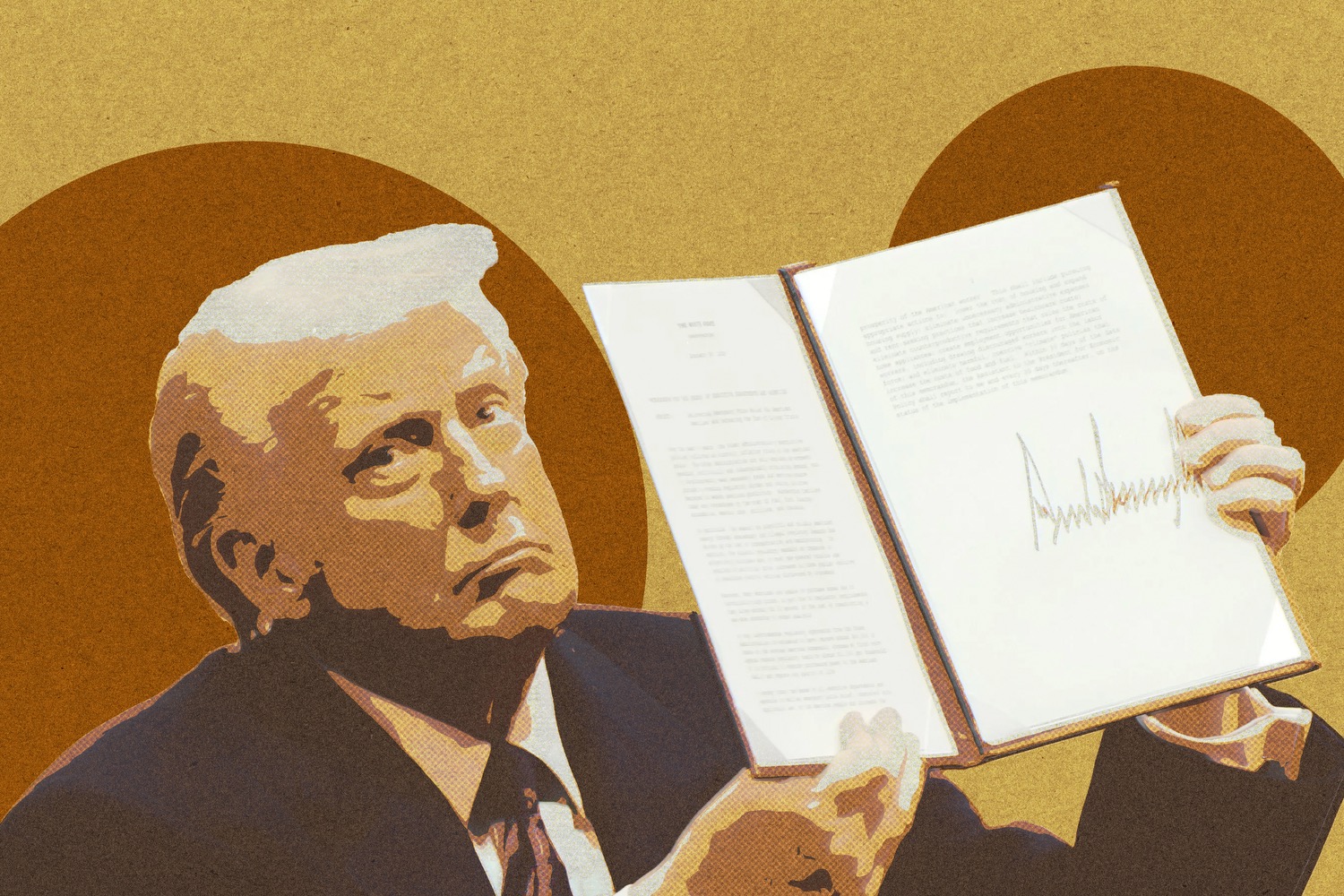

January 20th, 2025, The Trump Administration issued an executive order from The White House directing every US agency, “to terminate, to the maximum extent allowed by law” all grants and contracts relating to diversity, equity, inclusion, and accessibility(DEIA). In February, District Judge Loren AliKhan issued a preliminary injunction that indefinitely prevents the Trump administration from freezing federal grants. AliKhan wrote, “In sum, Plaintiffs have marshaled significant evidence indicating that the funding freeze would be economically catastrophic — and in some circumstances, fatal — to their members.” The Trump Administration has bypassed standard processes and is challenging the limits on the chief executive’s power.
The National Institutes of Health (NIH) is the largest source of funding for medical research in the world. As stated under the NIH’s budget motto “Research for the People,” nearly 83 percent of NIH’s funding is awarded extramural funding, research that is funded by a source other than the University, such as federal grants, largely through almost 50,000 competitive grants to more than 300,000 researchers at more than 2,500 universities, medical schools, and other research institutions in every state. This is an agency that has presently terminated close to 800 grants on studies addressing health inequalities. For most schools, around 10% to 13% of their revenue came from federal contracts or research funding, according to the AP analysis. For some universities, federal funding made up the bulk of their revenue.
“You see what we’re doing with the colleges, and they’re all bending and saying, ‘Sir, thank you very much, we appreciate it,’” Trump said on March 26th, 2025, at a Women’s History Month celebration at The White House. American higher education is under attack for illegally pushing diversity, equity, inclusion, and accessibility, or for not doing enough to combat antisemitism. Programs are forced to acquiesce or wait out the clock. Meanwhile, national security, economic development, public health, and young researchers are harmed.
”I didn’t find out until I brought up concerns in a lab meeting after the executive order was announced about NIH grants, and my professor admitted to the group that his grants were put on hold and uncertain for the future. He didn’t fully say funding was cut until about a month or so after the order, when future semester funding was brought up,” says Layla Abdullatif, a graduate research assistant at the Georgia Institute of Technology. She is one of the many students affected by the sudden policy shift. Without the financial lifeline she relied on to continue her work, she was told by university officials to prepare for the “nuclear option,” loans, or paying out of pocket. Financial support for students and researchers already exists on a tightrope, and one tug, like a funding cut, can unravel everything.
Graduate school often comes wrapped in prestige, pressure, and promise. The idea is that if you work hard enough, your ideas will shape the future. But what happens when that foundation suddenly cracks? For many graduate students across the country, the abrupt loss of federal research funding reveals a truth that’s long gone unspoken: the academic system wasn’t built to protect them. Behind the data and research proposals are students scraping together purpose and survival in a world that no longer feels secure.
“I was working on neurorehabilitation studies. We studied different rehab interventions in stroke patients. We also did basic science research on the principles behind rehab work. We work with many at-risk populations, such as people with disabilities from stroke, ones who may be veterans or come from diverse backgrounds. This means, without funding, especially any DEI funding, they would not be studied, removed from studies, and would be underrepresented in many research findings. We don’t want the research to solely be on White males since it doesn’t give the full scope. Many of them depend on research to help them since insurance only covers a certain number of rehab sessions.”
When funding dries up, it’s more than research that gets put on pause. It is the health and well-being of a friend or loved one who could go untreated. It is the livelihood of a young researcher who loses their stipend and can no longer afford to pursue a dream of change. The emotional toil of financial instability is the hidden labor of a graduate student. The loss of funding exposes the assumption that graduate students are privileged when most live paycheck to paycheck. This graduate student is forced to pivot from planning a career in academia to switching industries entirely.
She says, “I am feeling very discouraged. I wanted to make new scientific discoveries to better people’s health, but if no one cares about the why or wants to help you, it makes you think, what’s the point? It feels like PhDs don’t hold as much value.” It’s not just the funding, it’s the suggestion that her work, her time, and her contribution to academia no longer matter. Students are forced to adapt to unanticipated climate change by changing research topics, leaving academia, or seeking other ways to stay connected to their work. For a graduate student, you quickly learn that your value to the world isn’t dependent upon a grant; it’s merely another obstacle one must confront before change.
You then realize that systems are meant to be dismantled to fulfill the responsibilities of a democratic nation. Abdullatif says, “The only factor driving me right now is that I am near the end of my degree. I know I put in a lot of work to get to where I am, so I won’t let myself give up now. I keep telling myself I just need to finish.” The funding cut reveals the fragility and precarity of graduate student life, especially in STEM and research-heavy fields. Graduate students at private art schools may not be in federal labs, but many face similar feelings of invisibility, burnout, and identity disruption. In a system that isn’t always built to catch us, we must learn to build each other up.
The exigent demands of a complex world seek to destroy anything and anyone that defies the odds. That is, an exception, and if the rules of the world are not followed, it is an opposing force to nature. Being a member of an underrepresented community, your entire existence will be challenged. Labeled as an outsider equals exclusion from the ideologies of the Western world. Necessitating the birth and execution of innovative ideas. Those innovative ideas have saved me from hardship or soothed my agony. Higher learning has been my saving grace. Without federal funding, I would not have an education. I would not be in a position to make positive contributions to society. I would be a product of my environment. An environment that kills mercilessly, especially outsiders.
Now, as a graduate student, when I fail to meet my financial obligations, my loved ones succumb to their vices, resources are low, and good health remains touch and go; education is what sustains me. The work that I produce is bigger than the challenges I face because I know that someone somewhere is going through something similar. What is personal is what’s common. In this global space, we are all connected. One of the most impactful ways to strengthen this connection is through funding higher learning.