SCAD’s Fine Arts Showcase
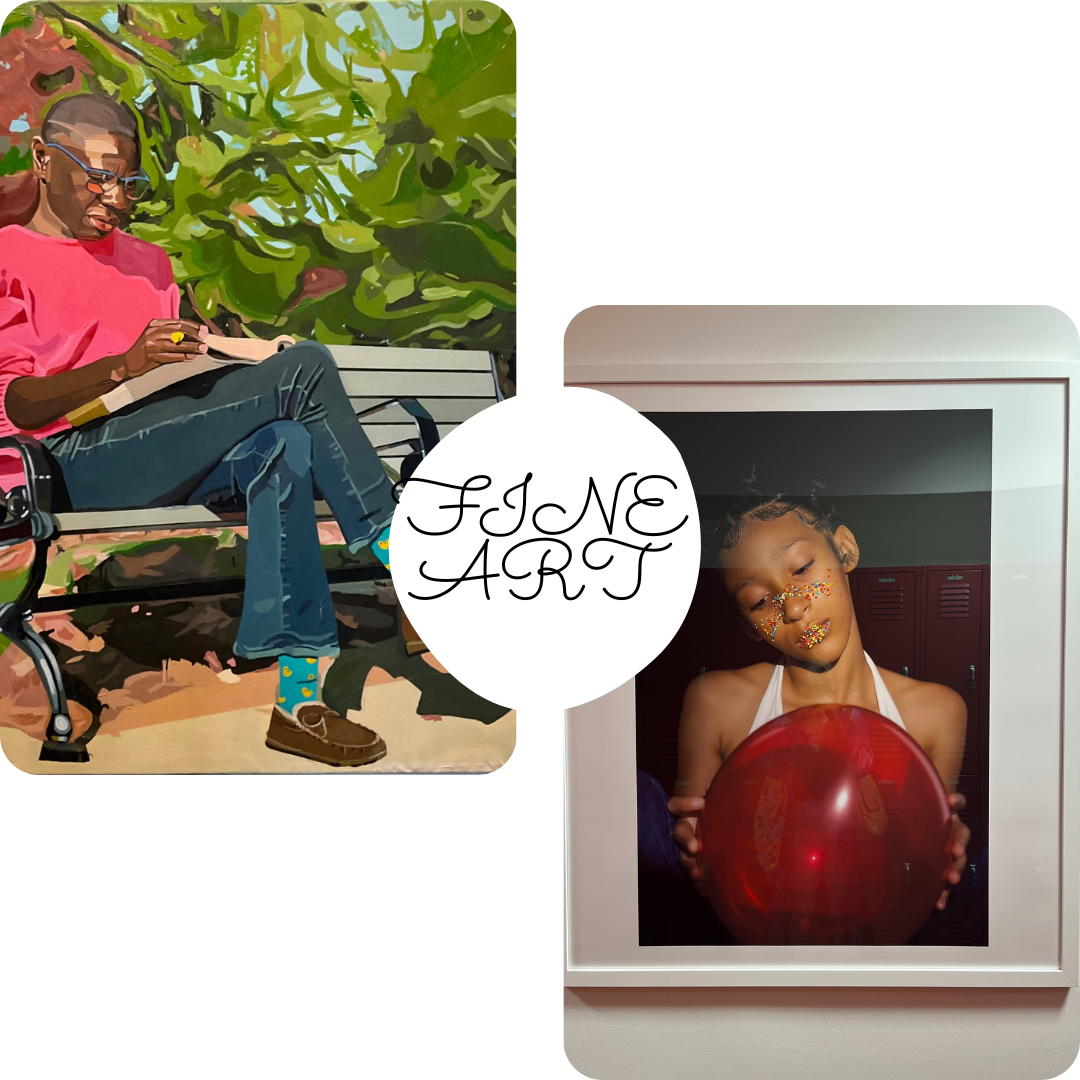 Dylan Griggs, B.F.A. painting, "Isaiah," 2024, Alexes Gillespie, M.F.A. photography, "Red Balloon" 2025
On April 18th, 2025 The Savannah College of Art and Deisgn (SCAD) Atlanta’s campus presented the Spring 2025 Fine Arts Showcase. The university showcased over 400 works of art from SCAD students, alumni, and faculty. This exhibition offers a one of a kind opportunity to view and buy a myriad of works facilitated through the university’s full service art consultancy, SCAD Art Sales. SCAD Art Sales exclusively represents the work of SCAD students, alumni, and faculty, both online and in physical showrooms. Providing unique opportunities for emerging artists to gain experience, build industry relationships, and develop confidence in navigating the art world. For many artists, particpating in this showcase was a defining moment in their career.
As the Spring quarter draws to a close, let’s highlight a few artist interviews of whom works were featured at the Fine Arts Showcase. From painting, photography, and print making these interviews have something for every artist. No one can tell your stories like you. You are the magical element in your art. Discover your voice and keep creating!
“What makes me special is what will make me successful.”
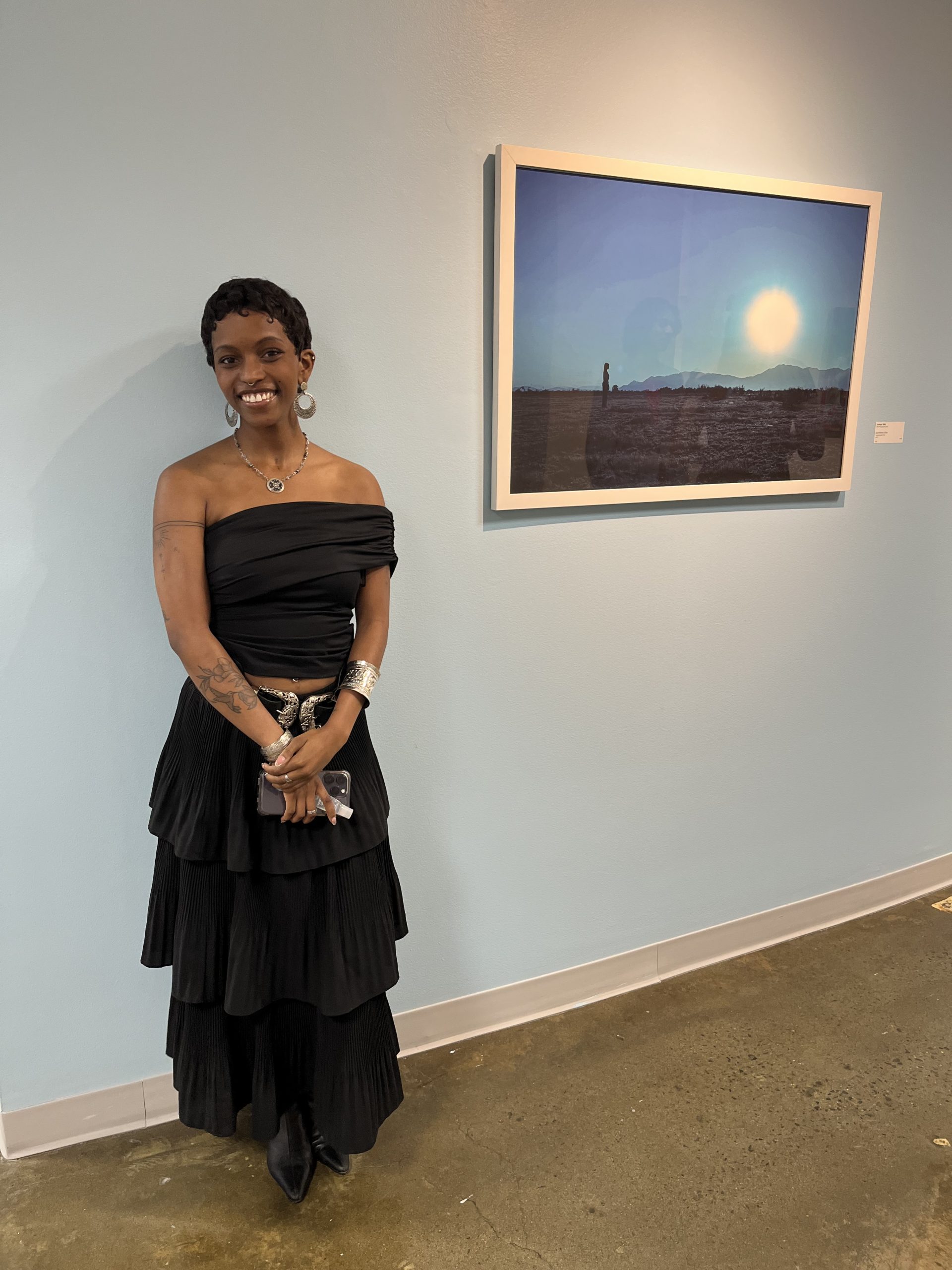
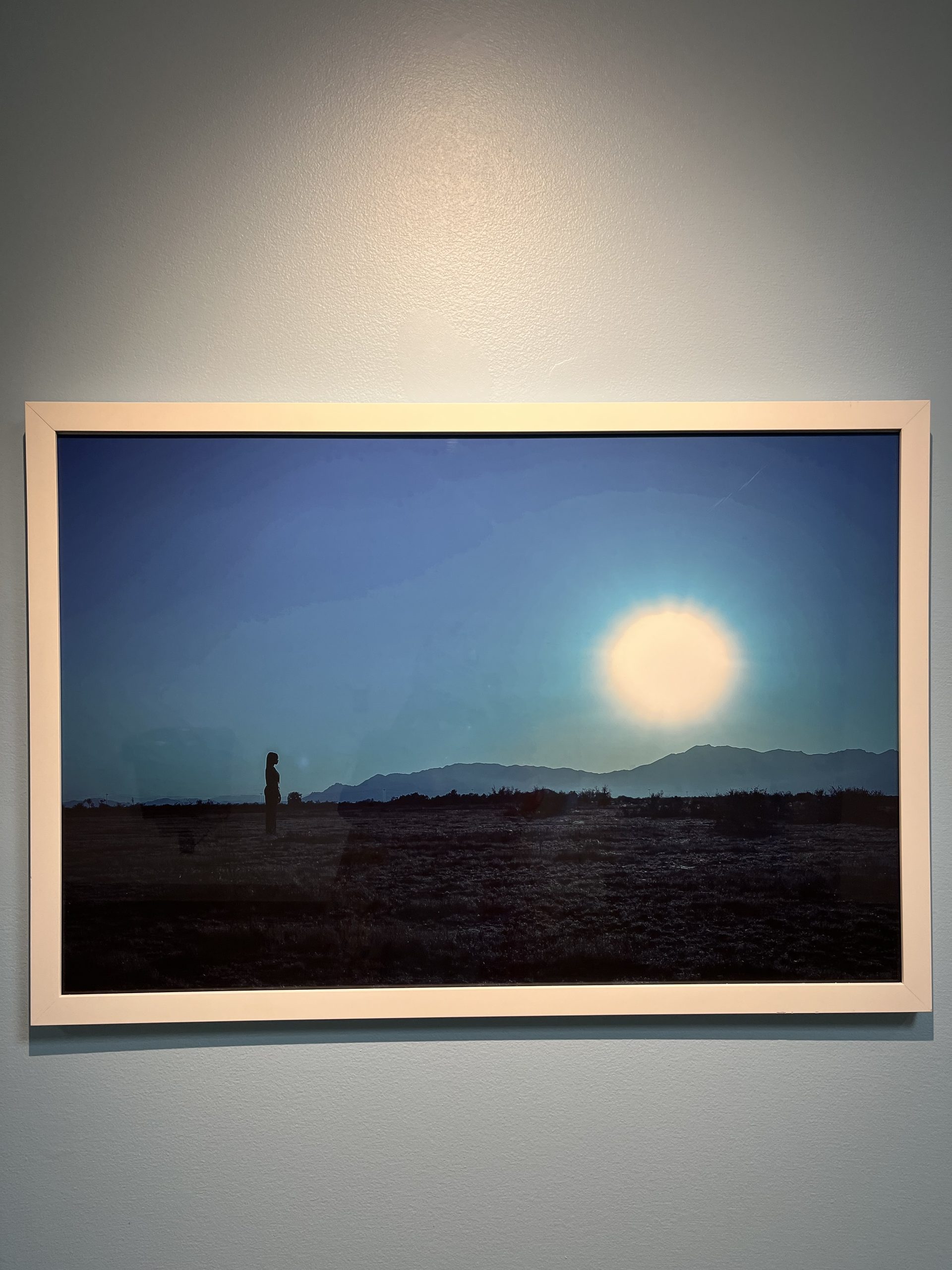
Jasmyn Saia’s Self Awareness In Action explores the intersection of identity and consciousness. Her visual narratives reflect the tension and beauty of personal transformation, examining how self-awareness and energetic alchemy shape how we see ourselves and the world. Her work is both reflective and participatory, a documentation of her spiritual path and a call for others to witness themselves more fully. She showcased a series of six pieces, one of which sold during the showcase. Saia’s peice titled Sometimes Blue (2025) compelled conversation amongst the gallery.
Can you tell me about your piece ?
This piece Sometimes Blue marks the beginning of the series. It is the start of a journey. The series itself is about the idea of suppressed expression and feeling like you can’t voice your truth. Leading to the inability to being authentic with your words and actions. I look at all my series as a journey because it reflects my spiritual transformation. The girl in the photograph feels restricted. Where she, me, is standing there facing herself, the sun, and the light. She’s coming to terms with the fact that she is not happy.
How did you decide that this photograph would be the start of your series?
The person photgraphed is my younger sister, but in the context of the project it’s me. My journeys always start with self reflection. I wanted to have a representation of me and my sister is standing in for me.
Do you feel that this work is a testament to your growth as a photographer?
It defienitey is. I received my unergraduate degree in politcal science coming here to SCAD was a massive pivot. My first quarter as a graduate photography student was very experimental. I was trying to figure out who I was as an artist, more specifically, discovering my style. I am fairly new to this world, but once I got my feet wet in the fall quarter I became more confident. This is the best project I have done thus far. It started with increasing my dedication to my craft.
Were you sometiems blue in your journey from starting at SCAD until now?
Yes, for sure. I choose the color blue for a couple reasons. The primary reason is because blue is associated with the throat chakra which is in charge of authenticty and speaking your truth. I also chose blue because its relation to the feeling of melancholy and sadness. The works I create are after i’ve emerged to the other side. Once I am at a space spiritually and mentally to express. Looking at this series I reminisce on those dark moments. Moments where I had no words just memories, vision, and a camera.
What advice would you like to share with other emerging artists in becoming confident in their works?
Consistently reminding myself that my point of view is what makes me special. That is something nobody else has. It is what is going to make me successful. I would tell them to create what is authentic to you.
“My paintings are an exploration of how we flatten ourselves to be more consumable.”
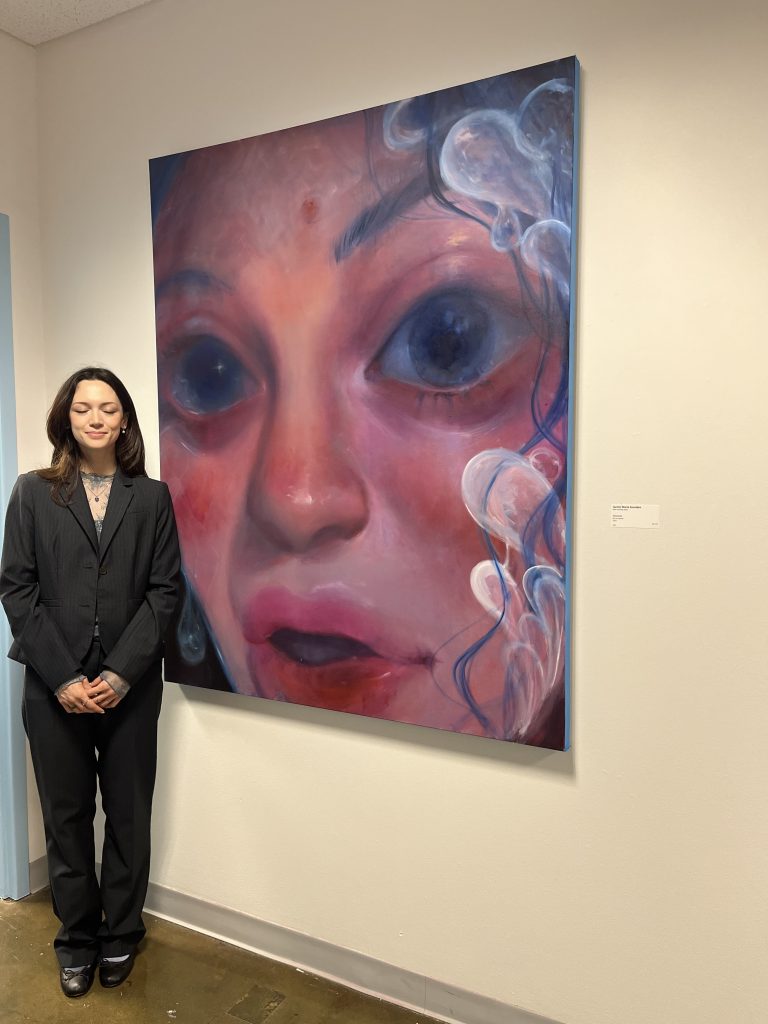
Jazmin Marie Saunders is a fine artist holding a BFA in Illustration. Presently, she is pursing an MFA in Painting at SCAD. Saunders is focusing on exploring our perception of beauty, identity, and the authenticity of our experiences through figurative painting. Her painting Glucose (2025) challenges public perception on women in culture.
What is the painter’s process-is your process intuitive or planned out?
I would say its a good mix of both. I start out with an image in my head that inspires some kind of emotion or mood.
For the most part I work with portraits and figurative faces so I have some kind of reference for that. Many of my portraits reference an AI generated photo. Some are pictures I found online. Glucose refrences a picture of Kylie Jenner that had been photoshopped. It was featured in a blog that was tearing her apart. I work intutively in that as I am trying to capture the mood or emtion I’ll add in the details.
I’ve noticed that women are prominently represented in your work—are you intentionally drawn to exploring themes related to women and their inner lives through your art?
I’m really interested in how we interact with others and the ways we project our own perspectives onto people; especially women and celebrities. My work explores concepts of beauty and the features we’re drawn to, particularly facial features. Someone like Kylie Jenner is a great example. She’s had plastic surgery; that speaks to how women often modify themselves to meet certain beauty ideals. I’m fascinated by how these figures, and we ourselves, become modified versions of who we are in pursuit of an ideal. But the closer we get to that ideal, the more uniform we become. It’s always the same kind of face: big eyes, full lips. I’m interested in why we’re so collectively drawn to that.

A lot of my work centers on women because I am a young woman constantly receiving messages about how I should look and how I should perceive myself. I think a lot about how others see me, and these paintings are an exploration of that tension. They reflect how much we flatten or edit ourselves to become more consumable. How we consume the images of others and, in turn, modify ourselves to be more appealing to a broader audience.
What do you want your art to do in the world; provoke, heal, disrupt?
I’m pursuing an MFA in painting because I want to move into gallery work. As an illustrator, I was often creating images for other people, but I became more interested in asking: What are the images I want to make and why? I don’t think my paintings are trying to make a definitive statement in any particular direction. They’re rooted in curiosity. I have questions, and painting is how I work through them. My hope is that when people view my work, they begin to ask their own questions.
What advice can you share to artists who are thinking about pivoting from one medium to another?
I believe that whatever is most personal to you deserves to exist. A lot of artists feel pressured to shape their work around a specific message or to appeal to a broader audience. But ultimately, the more you make art for yourself, the more universal it becomes. I really believe that all art is a self-portrait in some way. If it’s honest, people will see that. So make the art you want to make. Don’t mold yourself to fit what you think the art world wants, or what your mom wants, or what anyone else wants. This is your chance to express yourself and that’s where the true value of art lies.
“I was here one second then I stepped away and it was off the wall.”
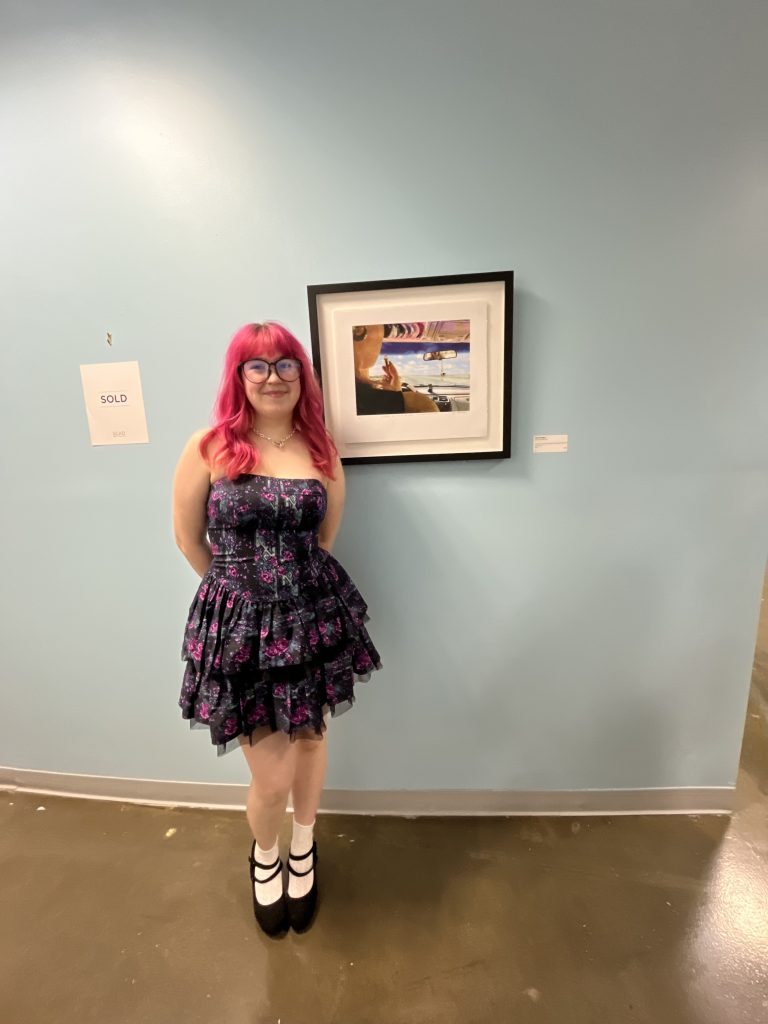
Dita Bridges, a printmaking student at SCAD exhbited two works at SCAD’s Fine Art Showcase; A Girl’s Lost Cause (2024) and Girl On Top Of The World (Spaghetti Junction) (2024). Dita says, “While the works I showcased aren’t apart of a direct series, they’re deeply connected through a shared sense of process and identity. I consider each piece a snapshot of where I am creatively — often rooted in printmaking but always exploring how materials, technique, and self-image collide. My inspiration comes from everyday iconography, personal archiving, and that feeling of taking up space, loudly and unapologetically.
Even when the pieces differ in medium or subject, they all carry the same undercurrent: me building my world through the art of print.”
What was it like selling your first piece titled A Girl’s Lost Cause?
It all happened so fast. I was standing there one moment, and thank goodness I took a picture in front of it while both pieces were still up, because I stepped away for just a second and came back to find it off the wall. I was like, ‘oh my goodness.’ I had such an emotional response. I actually felt really proud of myself. Coming into this space, surrounded by so many amazing artists and artworks, it’s easy to feel like a small fish in a big pond. But seeing my work there, being part of it all, it made me feel so happy and honestly, really special.

Does this encourage you moving forward on future bodies of work that you produce?
Absolutely. One thing I focus on a lot in my work, especially since it’s printmaking, is the concept of additioning. One of the strengths of printmaking is creating multiples, so when I make these works, like this one, which is one of nine, I know there are eight more just like it that can also be sold. This really reassures me because it shows that people are interested in my prints. It’s incredibly encouraging and motivates me to continue making additions and perfecting the process.
How do you feel about your gratitude for SCAD, and how thankful are you for the opportunity to be showcased?
This is definitely going on my resume—‘Artwork sold by SCAD Art Sales’. Period! I’m going to flex that. I’m so grateful. When I first toured SCAD, I told myself, ‘I can’t wait for the day when my artwork is on display here.’ Not only is my work on the floor, but it’s also been sold!