In September 2025, Nepal saw two days of social unrest as young people took to the streets to demand an end to government corruption. Media coverage centered the narrative of these protests around social media censorship, but that was only the tipping point for the larger issue of rising authoritarianism. It was a stunning show of collective action as the citizens of Nepal ousted their prime minister within 48 hours. He fled by helicopter as the Singha Durbar Palace went up in flames.
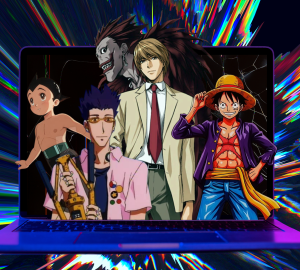
These protests were widely organized by Gen Z, who didn’t hesitate to do things their own way. They chose a new prime minister via the messaging app Discord and used pop culture symbols to signal their frustrations. On the ornate gates of the palace, a cartoonish skull-and-crossbones symbol with a straw hat from manga’s most popular series, “One Piece,” was seen hanging. This flag belongs to the series’ main characters, the Straw Hats, a gaggle of pirates who travel the seas together. It wasn’t just seen on the palace gates; protesters waved it throughout the streets.
“A lot of youths in Nepal love anime,” explained Khatri, one of the main organizers, in an interview with CNN. “We wanted the movement to feel like a Gen Z movement, so the slogans and symbols used during the protest were linked with things that Gen Z youths could relate to.”
To young people, this isn’t just a symbol from an anime; it’s a symbol of revolution.
The Straw Hat’s Jolly Roger wasn’t just used in Nepal’s protests. The symbol also made appearances in Indonesia, the Philippines, Paris, and the United States. In Indonesia, the flag was likened to treason, and government officials claimed protesters were using it to divide the nation. Amnesty International had to issue a statement after the government removed murals and took down the flag, claiming it was a repression of free speech.
All of these countries have something in common: they are fighting back against governments that have disregarded their rights and liberties for far too long. The story this flag originates from shares the same message. “One Piece” centers around the desire to disrupt and overthrow autocratic governments in the quest for a better future.
More Than Just An Anime
On its face, people may know “One Piece” as simply a story about the pirate Luffy, who has mythical stretchy powers and is determined to realize his dream of becoming the Pirate King. It starts with the 17-year-old pirate setting out to sea alone. In each arc, he tackles new and increasingly stronger enemies while making new friends to aid him in his journey, and maybe even join his crew. But within the manga’s first saga, it becomes very clear this isn’t your average anime.
In the fifth arc, Arlong Park, a fish-man and his crew take over a small village and create a hierarchy on the basis of race. Humans must pay the brutal tyrant Arlong a tribute or be killed. One of the Straw Hats, Nami, lost her adoptive mother after she was too poor to pay. She spent much of her childhood forcibly serving Arlong and creating maps. Luffy fights to free Nami from the forced subjugation and the village from this apartheid-like structure.
Arlong’s motivations for subjugating an entire village are not out of pure evil. The author, Eiichiro Oda, packs this arc with political analysis on racism to create a more meaningful story. Arlong and the other fish-men have faced discrimination for hundreds of years and have been barred from negotiating with other governments around the world. The discrimination the fish-men face has been likened by many to anti-Black racism in America. Fish-men were also enslaved by the World Government, the manga’s hegemonic force. This systematic discrimination led to revolutionary movements and, in Arlong’s case, true anger. It’s an arc that allows viewers to reflect on real-world issues and sets the tone for the rest of the story.
Eiichiro Oda doesn’t shy away from radical politics. His arcs tackle a wide range of issues, including queer culture, ethnic cleansing, famine, colonization, masculinity, and so much more. It’s very well known that his office has a photo of Che Guevara, one of the leaders of the Cuban Revolution. Many mangakas and artists of Oda’s generation share similar politics. Hayao Miyazaki was the secretary of the Toei Animation labor union, the studio that produces the “One Piece” anime, in the 1960s and has consistently advocated for workers’ rights and environmental concerns. Katsuhiro Otomo’s “Akira” has a similar theme of fighting back against an autocratic government after Japan’s hypercapitalist period in the ’80s. Even the video game developer Hideo Kojima shares a love of Che Guevara, referencing him positively in “Metal Gear Solid: Peace Walker.”
With this broader understanding, it’s not hard to conclude that “One Piece” was intended to inspire revolution. Throughout the story, Luffy constantly fights for the liberation of communities from oppressive governments that are often entangled with the autocratic World Government. This ruling power dictates the laws of the sea, controls freedom of speech and expression, and collaborates with authoritarian kingdoms so long as it fits their interests – so long as it doesn’t jeopardize their power.
The World Government begins to see Luffy as a threat because he fights back against the systems they have worked so hard to create. He inspires revolution when people are hopeless, just through his unwavering optimism and determination. He knows what he wants the world to look like; he knows he wants equal rights for all. This principle is built into Luffy’s very core; he never questions it. “Luffy, he is very determined. He has this quest. He and his crew have certainly gone through setbacks, but they’ve continued pursuing it,” Horbinski, a manga and anime expert, added. “That’s what people are responding to and thinking about when they are bringing the flag to these kinds of protests.”
The story perfectly consolidates a wide range of themes under the overarching umbrella that a false democracy fuels oppression. As more and more governments fall to fascism and authoritarianism, this message rings louder than ever. “One Piece” is far more than an anime. It’s a story that shows the power of collective action, protest, and revolution. The flag is a symbol that says what words never could. It transcends borders and languages, communicating one singular, definitive message to the world. “As he put the finishing touches on his spray-painted mural of the Straw Hat Jolly Roger, Indonesian artist Kemas Muhammad Firdaus told Reuters news agency the manga drawing was “a symbol of warning for the government, so they have to look at their people.”
People view Luffy as a role model- a vision for what they want to achieve and how. Luffy is kind to people and brutal to their oppressors. You can’t be soft on systems and officials that have treated you with little regard; you must be ruthless.