The “zombie” originated in Haitian mythology. Its roots come from the fear of black bodies being used even after death. Rooted in the fear of continuing to be dehumanized and brutalized. Since then, the zombie has evolved and taken many forms, but at its core, this mythological creature continues to do the same thing—explore our humanity. As far as zombie movies go, my favorite ones are the ones that are rooted in the origins, even if the creators aren’t aware they are. The 28 Days Later franchise keeps hold of those original concepts and expands on them in really interesting ways.
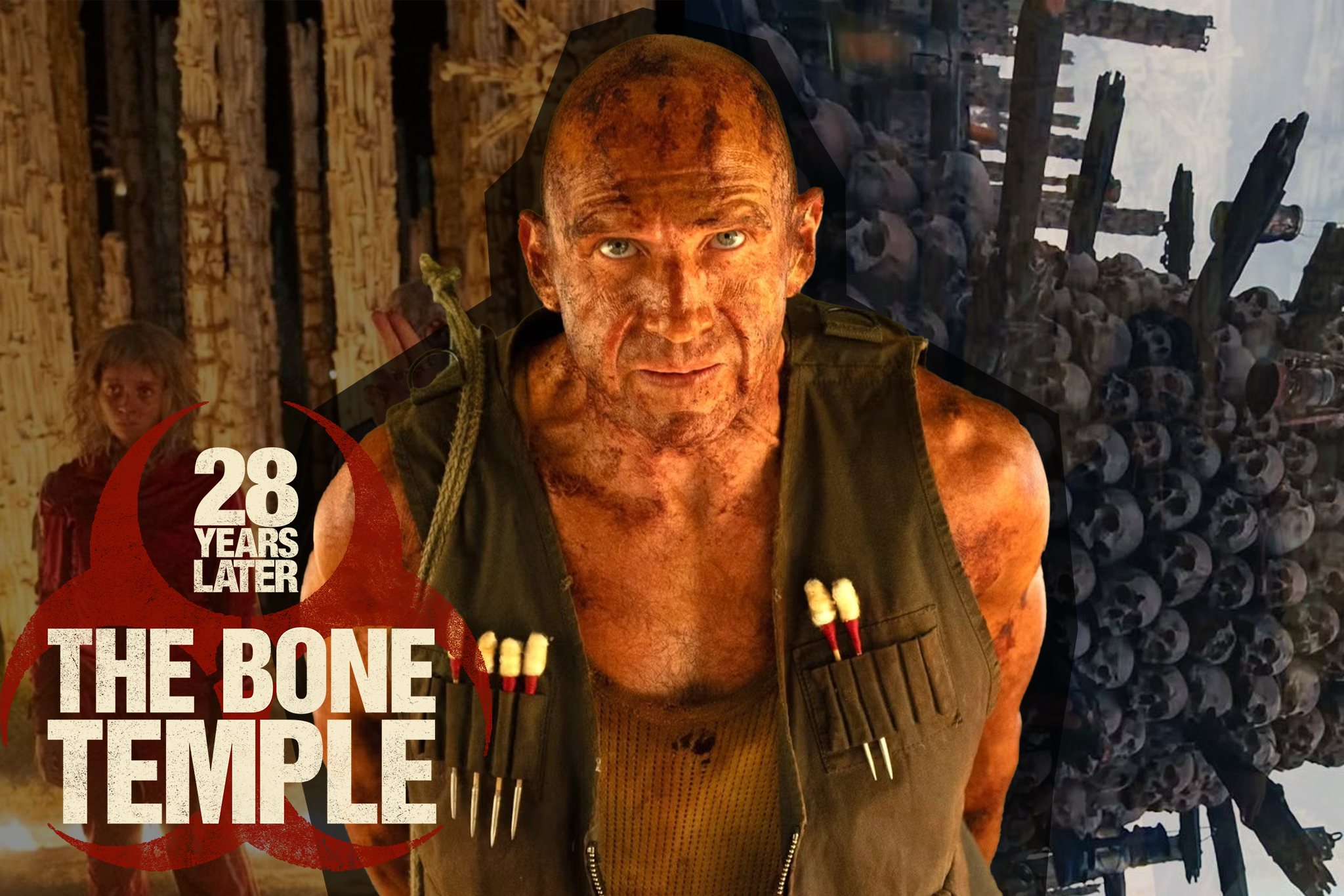
While the “zombies” in 28 Years Later: The Bone Temple aren’t the traditional undead corpse, they are still a reflection of humanity. Rage is something most of us have felt at one time or another, and the rage virus explores this emotion at its extreme. It explores rage not just in how it impacts the individual, but also the concept of rage as a collective. A particularly interesting concept to explore considering the rage currently building as people become increasingly fed up with systems of oppression.
The Bone Template focuses on the choice we make when we feel rage, or when it is presented before us. Despite the heavy religious symbolism. I don’t believe this movie is having a heavy philosophical, religious conversation about good and evil, which may be the surface reading when faced with Jimmy’s worship of the devil. Like Doctor Kelson, this movie doesn’t believe in God or the Devil, it takes the approach that it’s just us humans on this earth and we get to decide for ourselves how we respond.
When faced with the rage of this world, Jimmy chooses to respond in kind. When Doctor Kelson is faced with the same rage, he chooses to respond with kindness. This movie manages a good balance between having this deeper conversation, the darkness of this virus, and the Jimmys (the group of kids who’ve fallen for Jimmy’s cult), with humor. Having an extravagant musical number to Iron Maiden’s ‘The Number of the Beast’ with Doctor Kelson dressed like a teenage emo kid should feel out of place and ridiculous—but it doesn’t. This absurd musical sequence serves to build on the movie’s themes. It is not a devil or “demonic” music that makes someone cruel, it’s a choice.
A theme further developed within the infected themselves. This film, for the first time in the franchise, gives us a glimpse into the mind of the infected, and we see what Samson sees. He sees a monster. And are monsters not meant to be destroyed? Do we not choose to act on our cruelty when we face what we believe to be monsters? Samson is robbed of choice. Like the original Hitian zombie myth it’s rooted in. Samson, without choice, is robbed of his humanity.
Spike, despite the rage he’s seen in his dad, the rage and cruelty he faces with the Jimmys continues to choose kindness. Despite the threat to his life, he can’t bring himself to inflict pain on others. He doesn’t even seem angry when the woman escaping not only refuses to take him with her but gives him a good beating before running off. Instead, he looks painfully resigned, understanding why she chose not to trust him. He was, after all, standing right next to the people who brutally tortured and murdered her loved ones.
At its core, The Bone Temple is asking us to see the humanity in even what we consider to be the worst of us: in the infected, and even in Jimmy himself as he hangs on the upside-down cross, asking why he’s been forsaken. Doctor Kelson remembers the infected as human. He’s witnessed the infected tear apart babies, an act that most would only be able to describe as inhuman, as evil, but he clings to their humanity. Despite seeing the worst of their actions, he grounds himself in the belief that if rage remains, so must the rest of their humanity. Locked away somewhere, but nonetheless in there.
The first installment of the trilogy received a lot of mixed reviews because of the ending of the film. Now that The Bone Template has been released, the picture being created with these films is really starting to become clearer. This movie was a great addition not just that helped elevate 28 Years Later, but that is also adding something new to the mythology of the zombie and doing it with some flair.