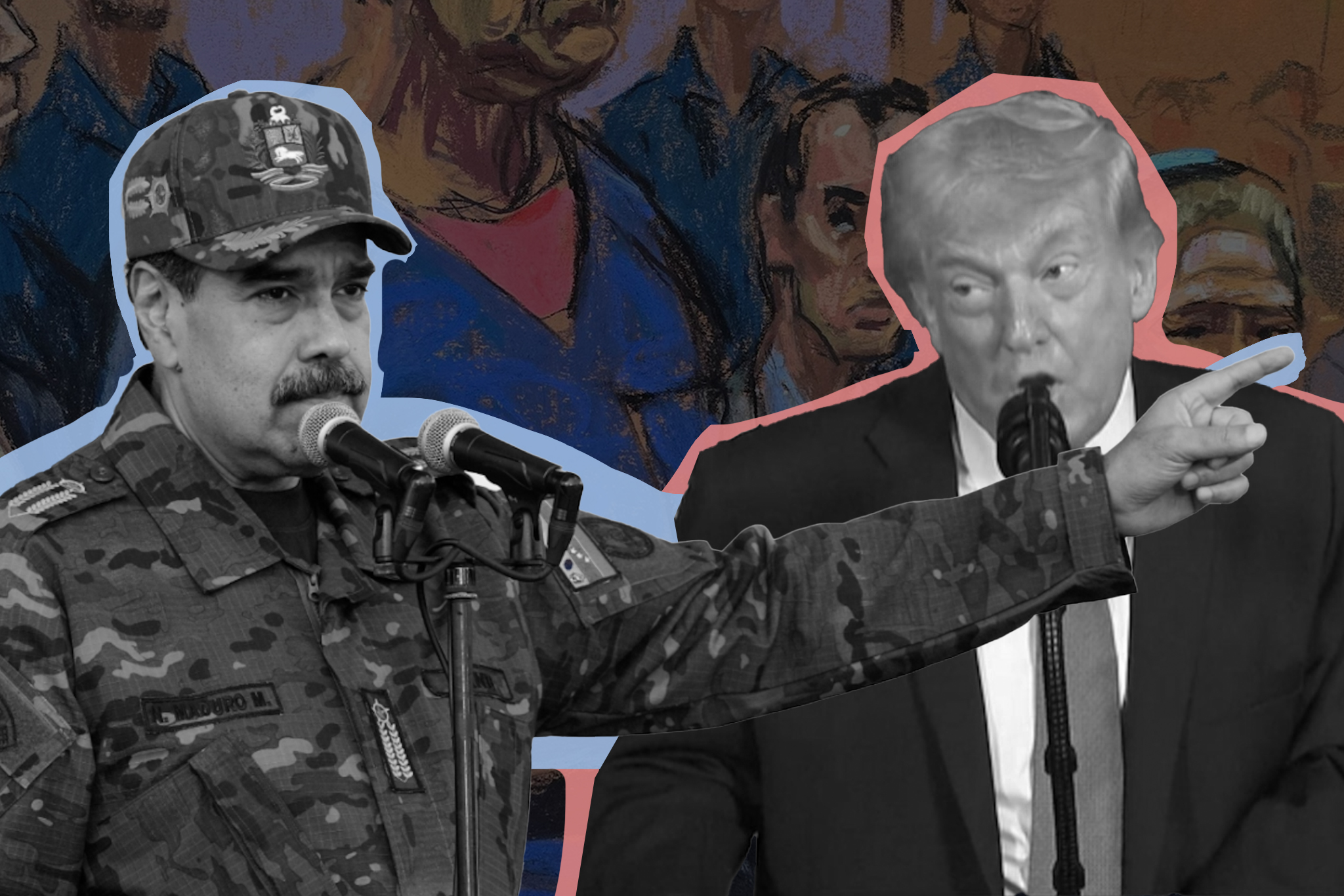
On Jan. 3, 2026, Donald Trump carried out a military operation in which he bombed Caracas early that morning and detained Venezuelan President Nicolás Maduro. The aftermath of this operation left many homes in ruin, and about 40 people were killed, according to The New York Times and Al Jazeera. Venezuelans, both in the diaspora and living in the country, have expressed mixed feelings about the abduction. Maduro was repressive in his own way and has been accused by critics of rigging Venezuela’s 2024 presidential election, but invasions carried out by the U.S. military have rarely been a positive scenario for the people being invaded. Trump has also been clear that his main motivation is to extract Venezuelan oil so companies like Chevron and Exxon Mobil can continue turning a profit.
After detaining Maduro, Trump expressed his plans openly at a press conference. “We’re going to have our very large US oil companies, the biggest anywhere in the world, go in, spend billions of dollars, fix the badly broken infrastructure, the oil infrastructure, and start making money for the country, and we are ready to stage a second and much larger attack if we need to do so.” In short, bend to our will or be executed.
To get a better understanding of the situation, I sat down with SCAD alumnus Rummel Medina to ask his thoughts on Maduro and America’s invasion of Venezuela. He was born in Caracas and moved to the US as a child in the early 2000s. His family wasn’t too fond of the Chavistas, moving to Houston to work in the oil industry once the material conditions in Venezuela started to worsen.
“My father actually worked in the oil industry in Venezuela, which is part of what allowed us to move to Texas…. I have family who was in Venezuela, and left Venezuela, for the same reasons that we did. It was an unstable place, and nowhere you want to keep your family when you don’t know where your next meal is coming from, and you don’t know what crazy situation is gonna happen next…The state of affairs of Venezuela for basically my entire lifetime has been horrendously complicated.” Rummel recounts.
The US’s vested interest in controlling Venezuela goes back far before Rummel was born. The country was considered one of the wealthiest in Latin America in the early 20th century due to its oil reserves. Foreign companies, most prominently from the US, invested heavily in the country’s oil and continually tried to influence its domestic politics. In the 60s and 70s, though, Venezuela made moves to maintain control over the resource by becoming a founding member of the Organization of Petroleum Exporting Countries (OPEC) and nationalizing its oil industry in 1976. The US grew a similar disdain for the country as they did with Iran’s Mossadegh (who they later overthrew after he nationalized Iran’s oil). This is where Trump’s assertion that Venezuela stole US oil originates. This desire isn’t new. We have long attempted to seize Venezuela’s oil at any cost.
Despite seizing control of this massively profitable industry, normal Venezuelans didn’t see any of this prosperity. On top of that, the country became controlled by a US-backed authoritarian named Carlos Andres Perez. When protests broke out in the late 80s, Perez sent the military to squash the uprising, killing around 300 people according to official accounts. Out of this anger rose a socialist revolutionary led by Bolivarian-inspired Chavez.
“I recognize that for older generations of Venezuelans, it feels like they’re finally being vindicated and finally seeing action taken against the regime and the people that took their country away from them. I truly can’t blame them for celebrating and for seeing the Trump administration as someone who’s standing up for them. But on the other hand, myself as somebody who grew up pretty Americanized and has had the opportunity to learn and understand where the United States really stands on the world stage without, you know, sort of the altruistic lens that a lot of times were put on the Americans involvement in other countries. I see what’s happening with Venezuela, and to me, it feels like the same situation just with a different face.”
Chávez was an incredibly skilled orator who was slowly able to convince the people of Venezuela to go against Pérez’s government. He used his connections as a military officer to stage two failed coups but eventually rose to the top as the next elected president of Venezuela. He had a vision of uniting Latin America, similar to Simon Bolivar, a liberator during Spanish colonialism and would use oil revenue to subsidize government programs.
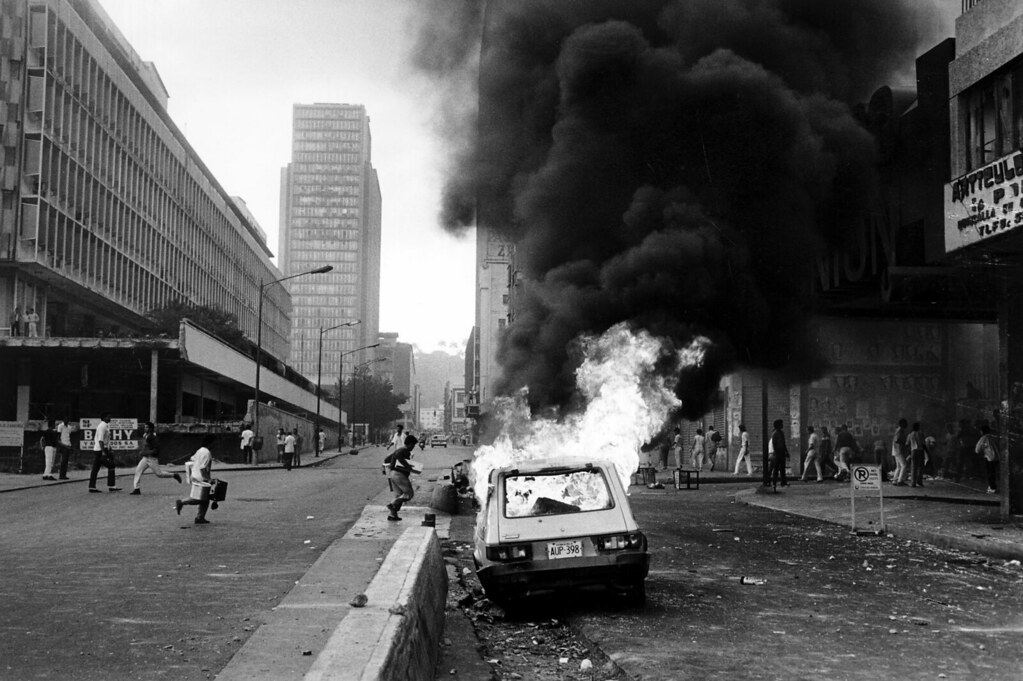
Photo courtesy of Google Creative Commons
A socialist in office wasn’t a part of the US’s grand design for Venezuela. How would they be able to seize control of this resource with the obstinate Chavez in power? So they fell back on old Cold War tactics. Let’s plan a coup! The Bush administration briefly ousted Chavez and installed the businessman Pedro Carmona instead. But just two days later, Chavez’s supporters filled the streets and demanded he come back into office. So they resorted to their final tactic: starve the country and force the citizens to oust him instead.
“Throughout the years, through the late stages of Chávez’s presidency, we did see the material conditions decline for people in Venezuela, right? Access to food was getting scarcer and scarcer … the inflation was outlandish. I remember an article that came out when I was a teenager about how the currency in the game, ‘World of Warcraft,’ held more value than the Bolívar, which is insane,” Rummel adds.
Sanctions are a brutal but effective way to bring about instability in a country. This is how the West isolated countries like Iran and Cuba from the global marketplace, by cutting off all avenues of trade. America, as the hegemonic power, is the leading example of the world. If we say jump, Europe and Canada ask, “How high?” This is when Venezuela and Cuba established close ties to each other, with the former regularly exporting oil to Cuba. With Trump forcing the hand of the current Venezuelan administration to cut ties with Cuba, this has had a devastating impact as the US sends another round of deadly embargos their way.
“And I think that’s part of why we saw the conditions continue to decline over the years, right? Venezuela specifically had no path other than to continue working with the countries that it was allied with… it kind of got trapped in that situation.”
Rummel and his family were certainly not supporters of Chavez and his successor, Maduro. From his perspective, Chavez promised a leftist agenda but ultimately left the country in a worse position overall. Although US intervention certainly bore the brunt of that economic downfall. “… When Chávez eventually passed away [in 2013], and Maduro took power, there was this period of time where we didn’t know what that meant, and we didn’t know if this was an opportunity for proper change in the regime, and you know, possible elections, or special elections…in order to actually get on a path of normalcy in some way. But ultimately, it just became more of the same.”
Maduro was definitely not equally yoked to Chavez. He won his first election with only a razor-thin margin despite serving as his late predecessor’s vice president. Obama’s continuation of sanctions worsened Venezuela’s already weakened economy, Maduro was much harsher on dissent, and he didn’t nearly have the same support from the people or the military. These were big shoes to fill, and he was just a size too small.
As Rummel speaks to me, he expresses his conflict with the recent round of US intervention in the country. “So, there definitely was not a lot of love and support for Maduro from me, specifically. Knowing what he had done to my family, knowing what he had done to everyone who lives there. But then, of course, what happened with, or what has been happening with the United States’ involvement in Venezuela, has been … confusing, to say the least. The goal of this administration is finding a way to put more money in people’s pockets, companies like Chevron and Exxon…when there’s a pretty massive human rights component … and that feels like an afterthought, and that is incredibly disappointing.”
Trump has continually signalled that he would continue the offensive against Venezuela. His Defense Department struck boats off its coast, killing at least 99 people across 26 strikes, according to the ACLU. Trump advanced the claim that these boats carried drugs and that Maduro was the kingpin playing in the shadows. There is actually evidence that supports the contrary, however. Evidence that suggests these victims of strikes were simply regular fishermen, making these attacks illegal.
The Venezuelan people were also subjected to regular attacks of Trump’s rhetoric during the 2024 election cycle. He asserted the country was dumping their rapists, drug dealers, and the mentally insane into America. He disparged these immigrants at every turn, even advancing a lie that a Colorado apartment was being controlled by a Venezuelan gang, Tren de Aragua. The argument relied on a false narrative that Venezuelans constituted a national threat to the US.
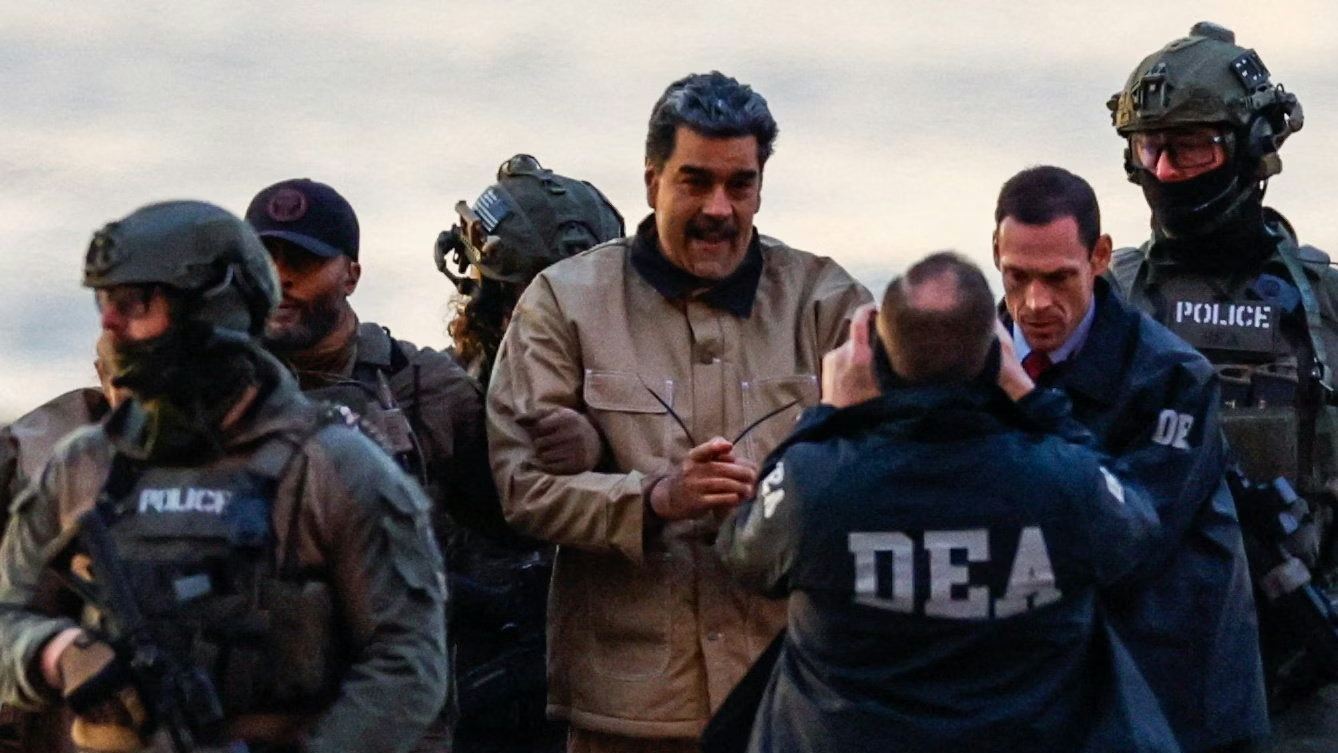
Photo courtesy of Google Creative Commons
Still, it is shocking to see him make such a bold move in kidnapping Maduro. “I think that’s just seeing that same villainy that my family saw in Venezuela, just in a different place, and having seen where that ended, I get scared, and I get nervous.” Rummel continued.
After Maduro’s kidnapping its important we examine the parasitic nature of the country we live in. Although for now, he’s backed down from the idea, European leaders, for a split second, experienced what it’s like to have their sovereignty threatened as Trump aimed for Greenland. If the goal of capitalism is endless exploitation, endless accumulation, that train won’t stop for anybody. Not for our western allies, not for sovereign nations – so what’s to stop it from coming for you? Venezuela may be an ocean away, but as we enter a second Trump term, the volatility we’ve inflicted on them seems closer than ever.
“… We have a leader who is clearly more interested in securing for himself and for his immediate allies, and is more interested in enriching himself and his immediate allies. Who sees the Venezuelan people and the Venezuelan resources as a means to an end. Judge, jury, and executioner for people who we have no way of knowing whether or not they were actually guilty of the crimes that he was accusing them of, kidnapping a president, regardless of the legitimacy of that election, and regardless of all the harm that he has caused to those people. … [Do] I support that? No, I don’t think I can.”
“I would love to say that the future of Venezuela is prosperous, and its people are getting the power back, … [but] I don’t know if that’s possible with where we are,” Rummel laments.
Knowing the history of Venezuela, of US intervention in Chile, Cuba, Nicaragua, El Salvador, and beyond, if we take a step back, there’s a realization that Trump isn’t doing anything new. The US has always been an unaccountable hegemonic force that can exert its grand design of capitalism across the globe. If that means backing death squads in Nicaragua or starving Cuba, it is but a necessary evil or perhaps in their eyes not evil at all. The people of the Global South are just pawns. Just insects to squish, chess pieces to move, they have never been human. Trump is simply expanding on a vision that was set long before him. He may carry it out in a more irrational, erratic fashion, but the goal is certainly not unique. Just ask Obama, Bush, or even wake JFK up from his grave, and he’ll tell you this was the plan all along. Oil is wealth and wealth is power, which must be obtained by any means necessary.