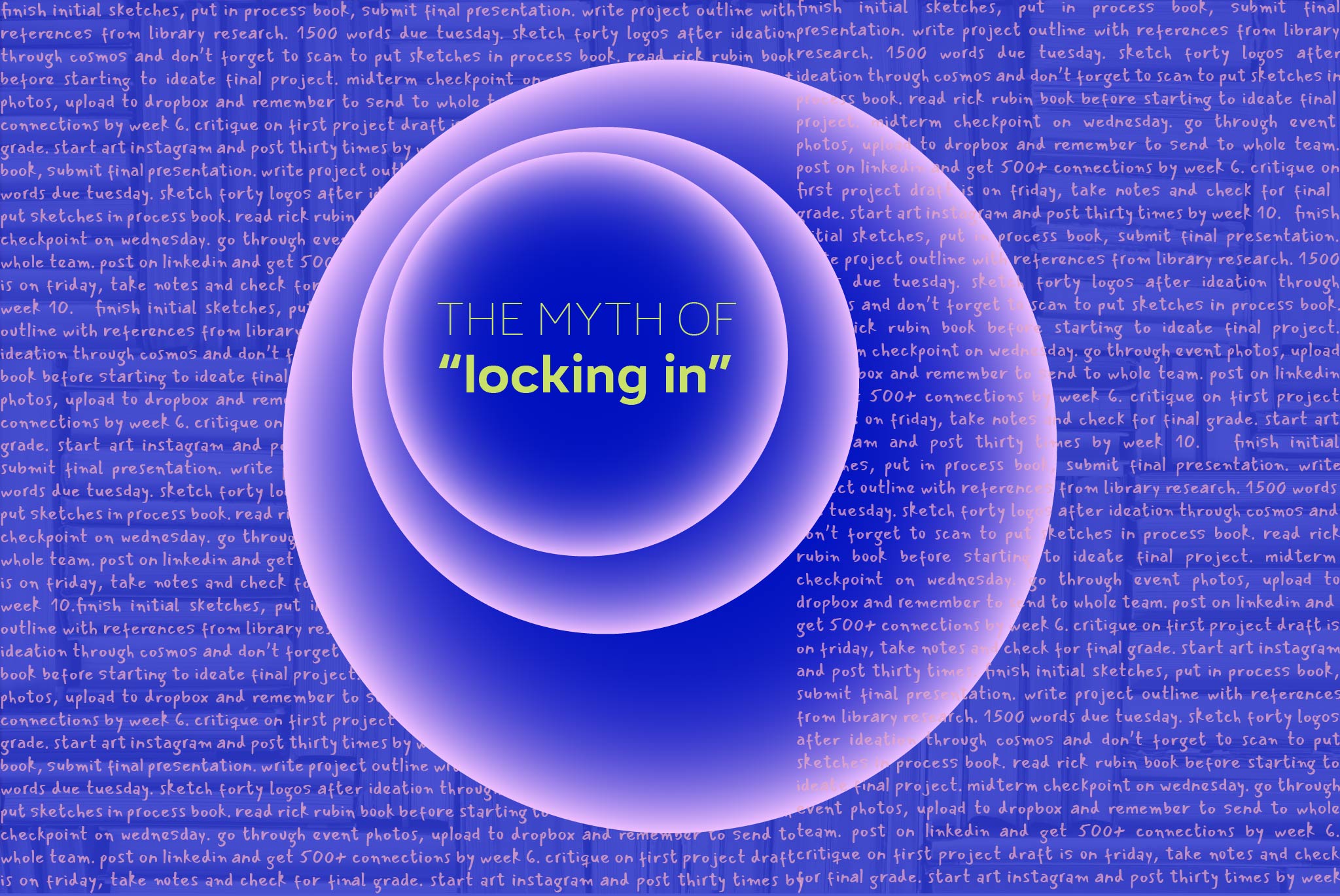
If the SCAD experience was a TV series, last quarter would have been titled “The Lock In.” The concept of “locking in” was everywhere—in classes, on social media, and at the gym. Everyone was after a higher level of concentration, a flow state where work happens in large, uninterrupted stretches focus.
Locking in is a term that can be applied to numerous situations. You can lock in on studying, working out, even time with friends. A recent BBC article by George Sandeman describes this trend of prolonged focus as a way of both romanticizing hard work and manufacturing a sort of tunnel vision. It can be applied to a few hours or a few months, whatever time period it takes to achieve your desired level of achievement.
So, does it work?
It goes without saying that productivity methods vary from person to person. Some people thrive on listening to their favorite music, drinking energy drinks, and being surrounded by chatty friends. Others need to put on their noise-canceling headphones and work in the quietest study nook at the library. However, taking a look at the research on how the brain processes information can help us identify which approach works best.
Studies from Princeton University and the University of Michigan show that a distraction-free environment is the first step in achieving strong focus. This applies to both interpersonal activity and physical environment. Cluttered desks and conversational neighbors detract from productivity. Likewise, no matter how hyperproductive it feels, the studies also show that multitasking is less effective in both quantity and quality than focused work.
Culturally, there’s something comforting about the lock in, especially during winter months when the weather is bleak and life feels boring. It’s exciting to work hard with an idealized, imaginary future in mind. Maybe you’re working for a job, working to move cities, or even working to prepare for that backpacking trip you’ve always wanted to go on. Locking in on a goal for a period of time can give you a sense of purpose and discipline when motivation wanes.
In artistic settings, locking in for long periods of time can build comraderie with other artists and keep you in a creative headspace. Long hours in the studio can create an artistic flow of ideas and creation, as well as a heightened willingness to experiment. The shared accountability of working for a long time with friends or classmates can be a helpful way to ensure you avoid distractions and work effectively.
However, while locking in may seem like a helpful way to force yourself to focus, it risks creating unhealthy habits and burnout. Long work periods can cause people to forgo self-care, food, and helpful brain breaks. Depending on one big work session to get your homework done can also encourage procrastination. It feels great to finish all your work in one sitting, but less great to lose out on hours of sleep and forget to eat dinner.
Short, scheduled work sessions over a period of time are more effective and often creates better results. A little bit of dedicated work time every day eliminates much of the risk of mistakes that are often made by attempting to work all in one sitting. Adequate sleep, good food, and social activities can likewise have positive impacts on your ability to lock in when needed.
Like every productivity method, there are pros and cons to locking in. It heightens productivity and focus, but encourages procrastination and risks burnout. Find what method works best for you and your work style. Don’t underestimate the power of the lock in, but don’t think it’s the only way to get work done.