Hello, Dior! How SCAD FASH is Exploring Education Through Process in Their Newest Exhibit

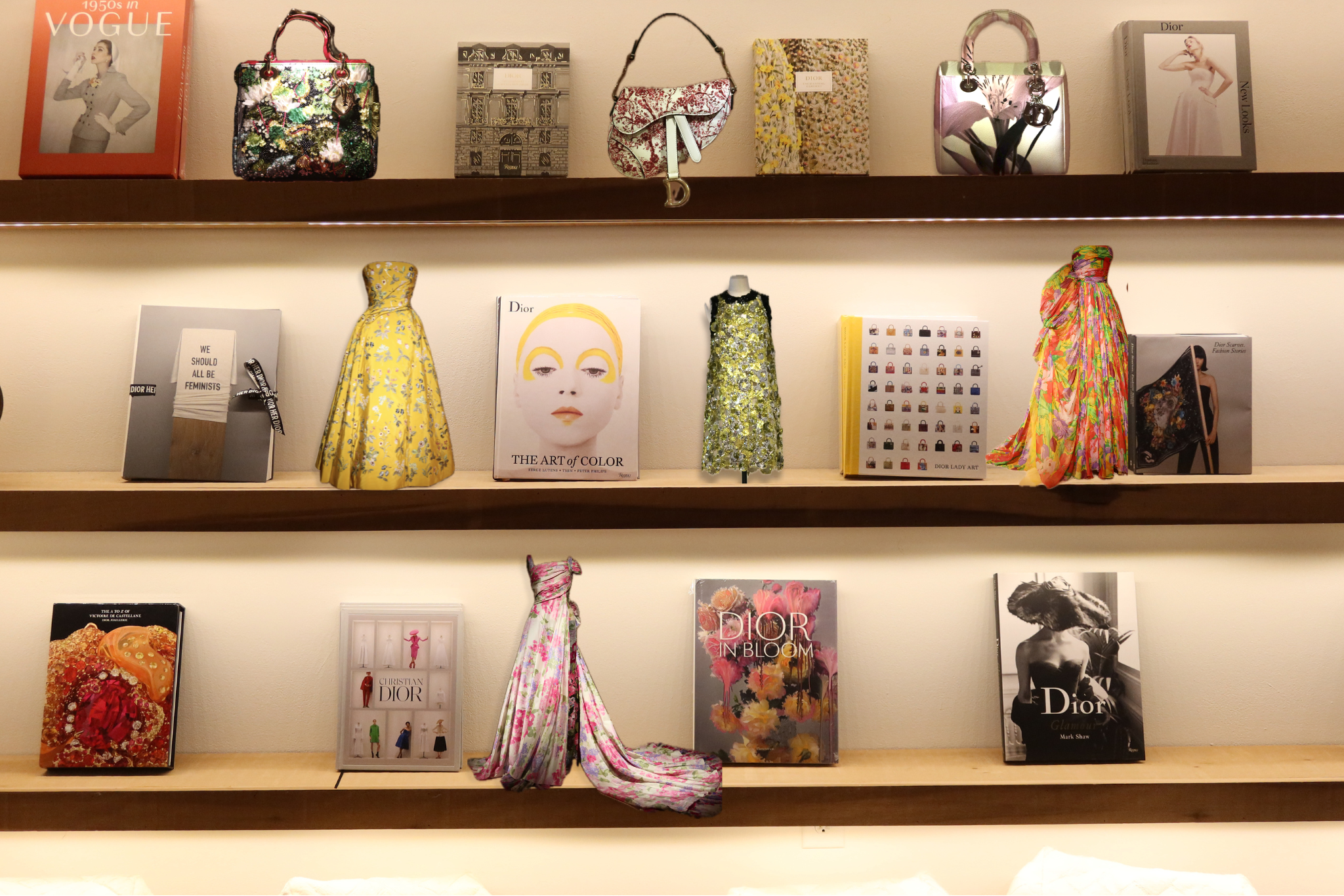
Since 2015, the SCAD FASH Museum of Fashion + Film has brought some of the best designers, creative ateliers, and artifacts right to the SCAD Atlanta campus. Each exhibit aims to inspire students through the exploration of fashion history. Over the years, SCAD FASH has succeeded in marrying education with museum culture and excitement with exhibits like “Campbell Addy: The Stillness of Elegance,” which embraced Blackness and the exploration of identity, and “Sandy Powell: Dressing the Part: Costume Design for Film,” that featured some of Powell’s most iconic designs like the garments of Jordan Belfort in “The Wolf of Wall Street.”
With so many exhibits built around the finished creations of modern artists, students often get the pleasure of seeing final looks up close. But what happens when the creative process itself becomes the focus of education rather than the end product? That question is now being explored through SCAD FASH’s newest exhibit, “Dior: Crafting Fashion.”
The exposure to such a rich history of a brand with displays centered around of each of the eight Dior creative directors is one of the most comprehensive displays SCAD FASH has presented. The exhibit explores the wealth of history behind the brand, the crafting of couture garments, and the work behind the runway, all available to SCAD students free of charge. It is split into zones, each of which focuses on one of these ideas with an overarching goal to remind creatives of the true work it takes to achieve success.
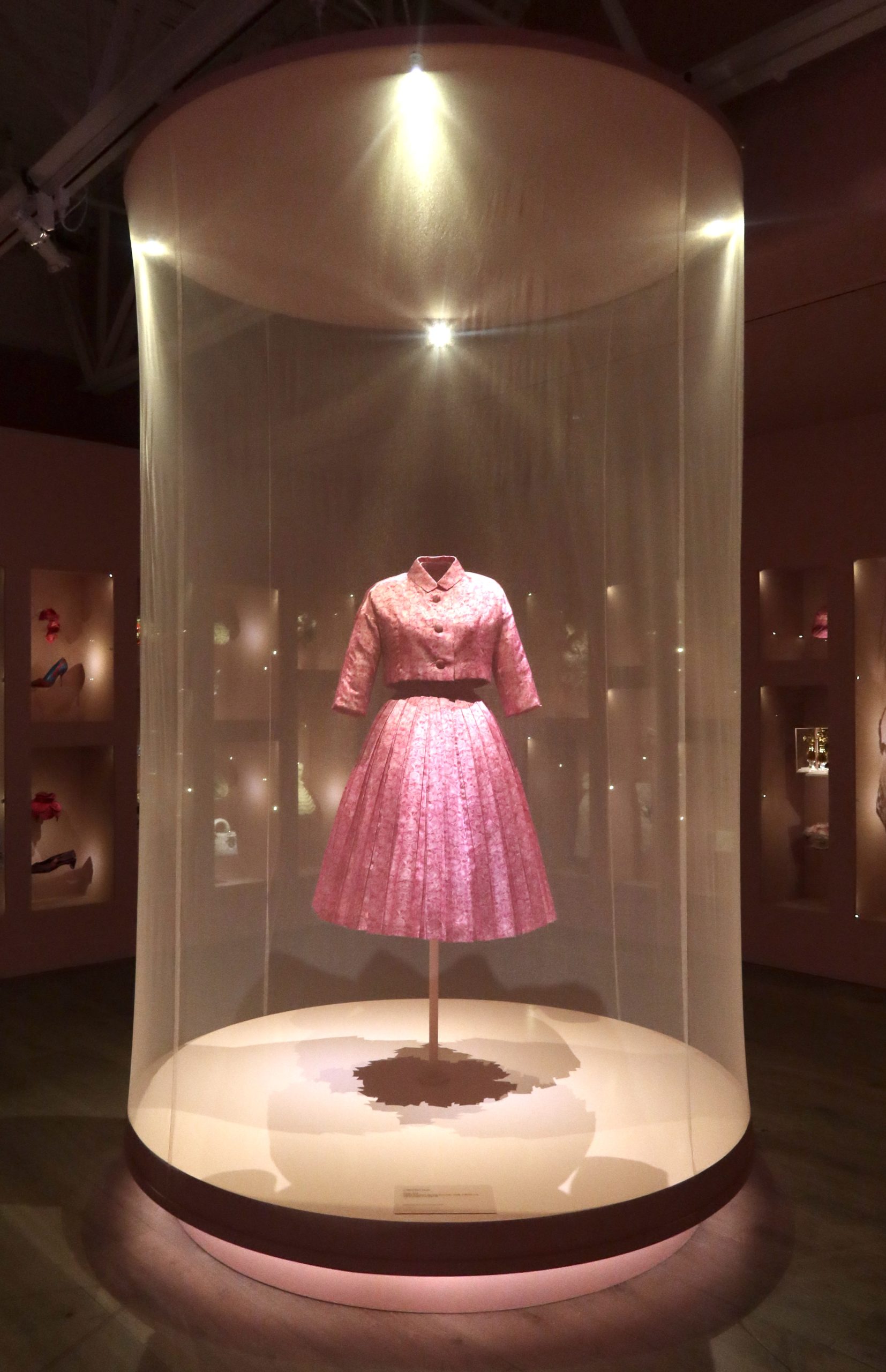
Guests enter directly into zone one, an opening area featuring works from all eight designers that have guided the company’s creative direction. The display starts at the beginning with Christian Dior’s “New Look,” the first innovative contribution he made to the world of fashion, and a testament to his talent as a designer. The first garment in the collection, “Bar Suit,” is alone on display to highlight its significance as both the start of the brand’s success and the first scene-changing piece of post-war fashion.
As visitors continue to move through the first zone, they are presented with crucial information about Dior and how he began the brand. With each look, the museum includes several in-process sketches, as well as an explanation of what inspired the piece. Some of the displays even include a variety of fabric swatches considered when choosing the final fabric. Audiences get an inside look at Dior’s creative direction and the inspirations, like his love of gardens, that continued to influence the designs of those who followed him.
One of these individuals was Yves Saint Laurent, Dior’s protégé who took over the company at the age of 19. Viewers journey with Laurent as he lets his youth guide his fresh ideas for Dior while still staying true to his teacher’s guidance. The zone works as the unveiling of a curtain, showing the building blocks of a top haute couture brand. It is a display of the time and individuality required by a brand’s creative designer, detailing the various forms that process and inspiration can take. The zone even includes the modern shift that happened with Jonathan Anderson, and how mood boards became a new way to fuel inspiration and highlight progress.
The first part of the exhibit really emphasizes the educational benefit behind acknowledging history and origins, and the importance of understanding how creativity can take on many forms across various tenures. Walking through the first section of the gallery, students are already set on the path of learning, and this continues into zone two, which is all about toiles.
In fashion, a toile is a muslin mock-up garment used to demonstrate how a piece is sewn, including the smallest details in the folds and creases of a garment. Toiles serve as the structural foundation of couture garments. They are used to test drapery and underscore the construction of a garment, allowing the designer to discover any changes that need to be made before it is crafted from more expensive fabrics. At the “Dior: Crafting Fashion” exhibit, zone two is entirely composed of toiles from Dior designers Raf Simons, John Galliano, and Maria Grazia Chiuri, giving an insight into the inner workings of designers before the final piece is created.
The sheer purpose of a toile defines its educational potential, but the ones selected for display showcase the markings made on them by their designers. Visitors can immediately see what is being altered and the vision the designer had for the piece. The garments even show the raw cuts and unconcealed clasps holding them in place. In one of Galliano’s pieces, the bold red marker he used highlights the cuts and biases being made on the dress to viewers in the clearest possible way. Seeing the toiles is an opportunity to learn the craftsmanship and attention to detail it takes to create a couture garment.
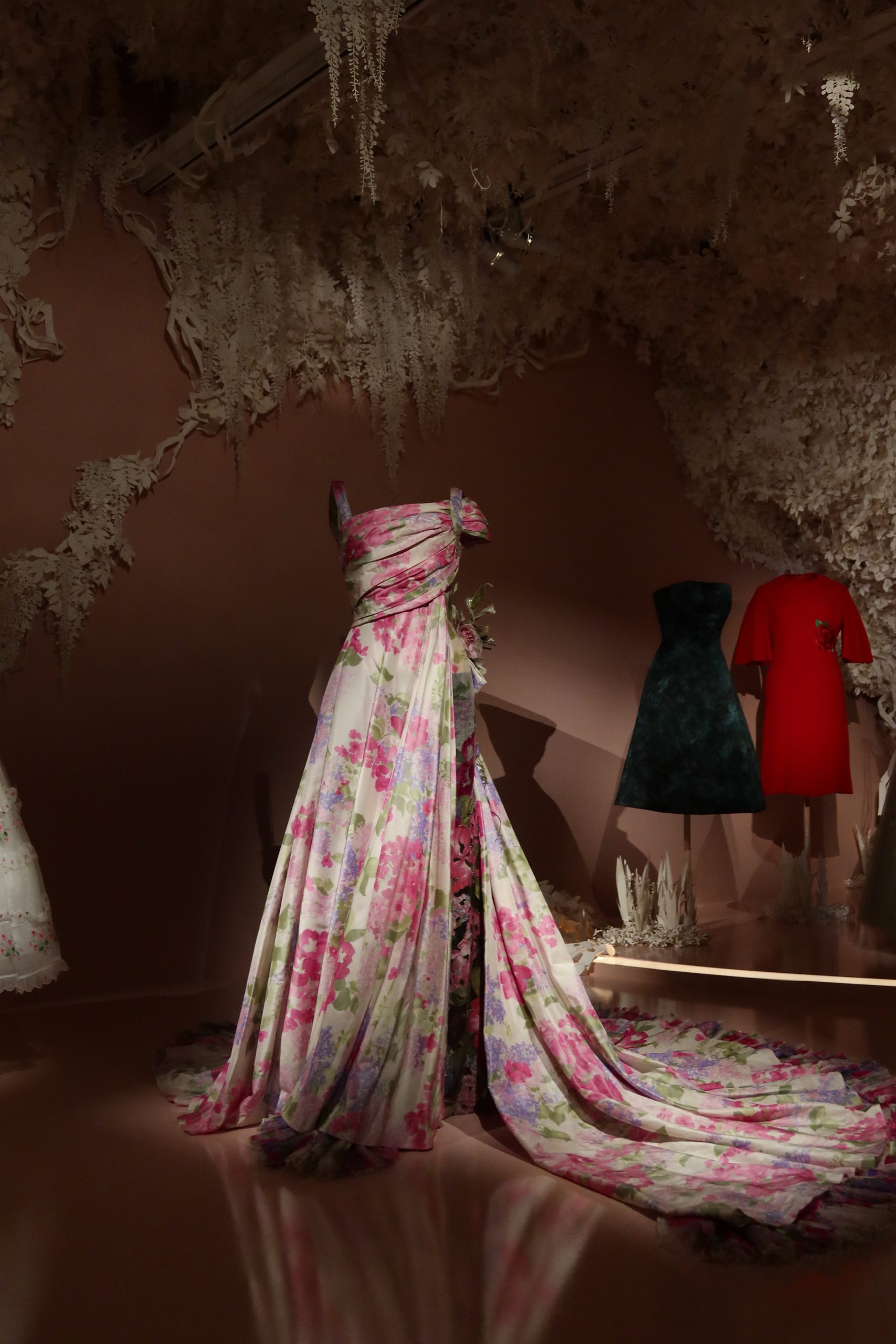
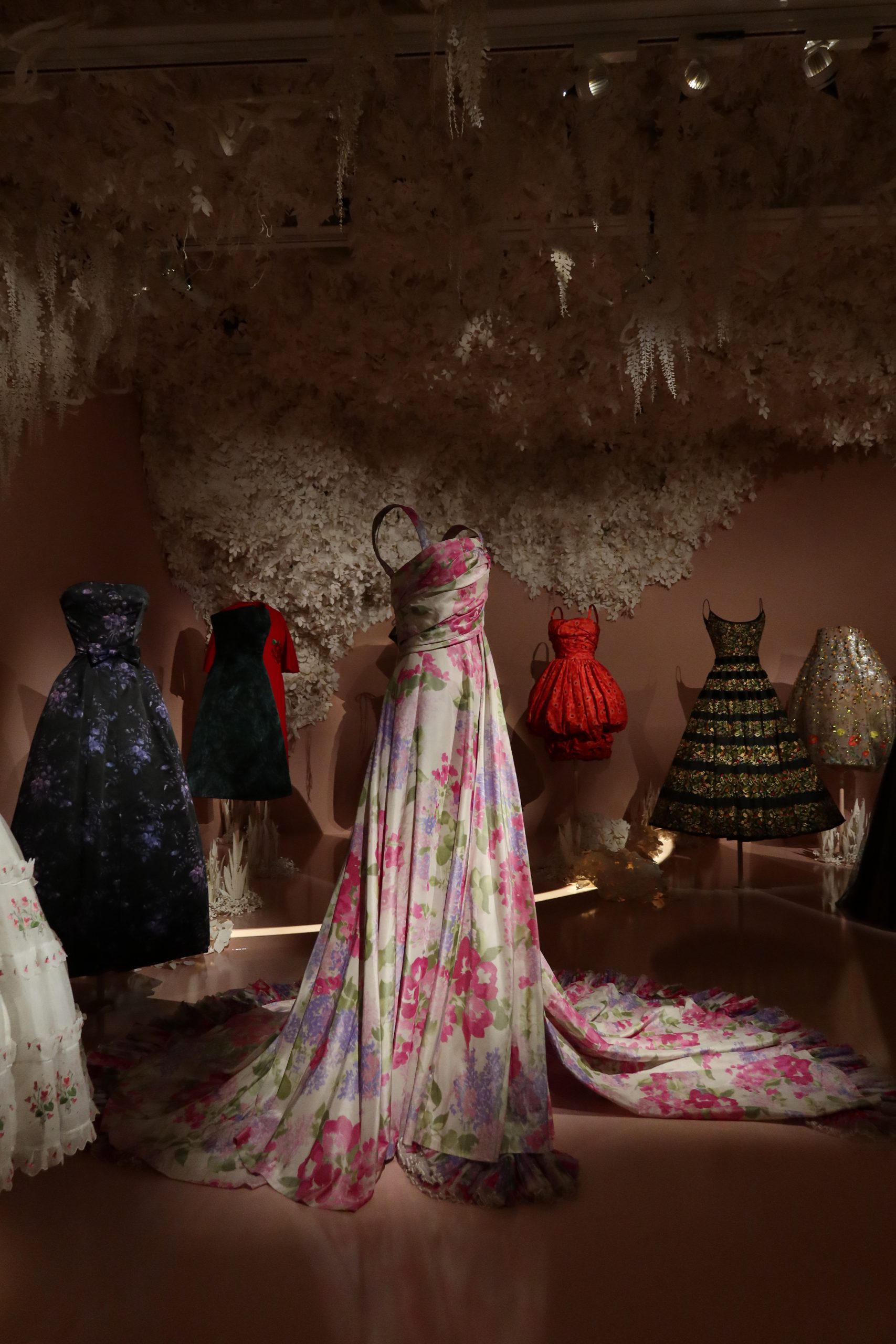
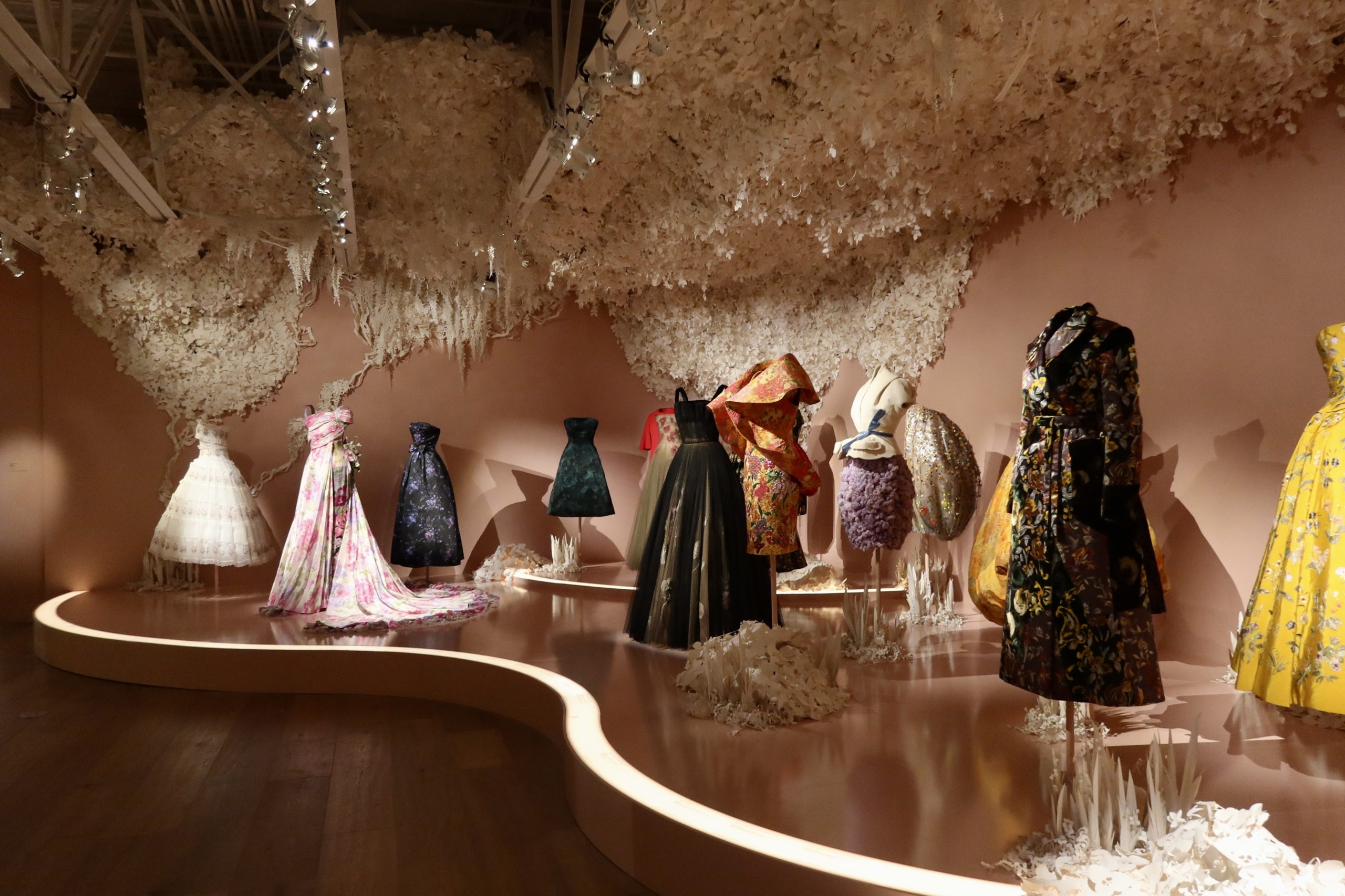
Zones three and four show some of the brand’s most iconic and historical pieces. Viewers enter a butterfly garden-inspired gallery that displays Christian Dior’s garden dresses, as well as the unique takes on flowers and garden imagery of designers like Gianfranco Ferré and Yves Saint Laurent. With each paper flower decoration, students get insight into the use of art in creating an atmosphere. Details like these help bring audiences back into the world of Dior through outside influences that speak to the story and history of the brand.
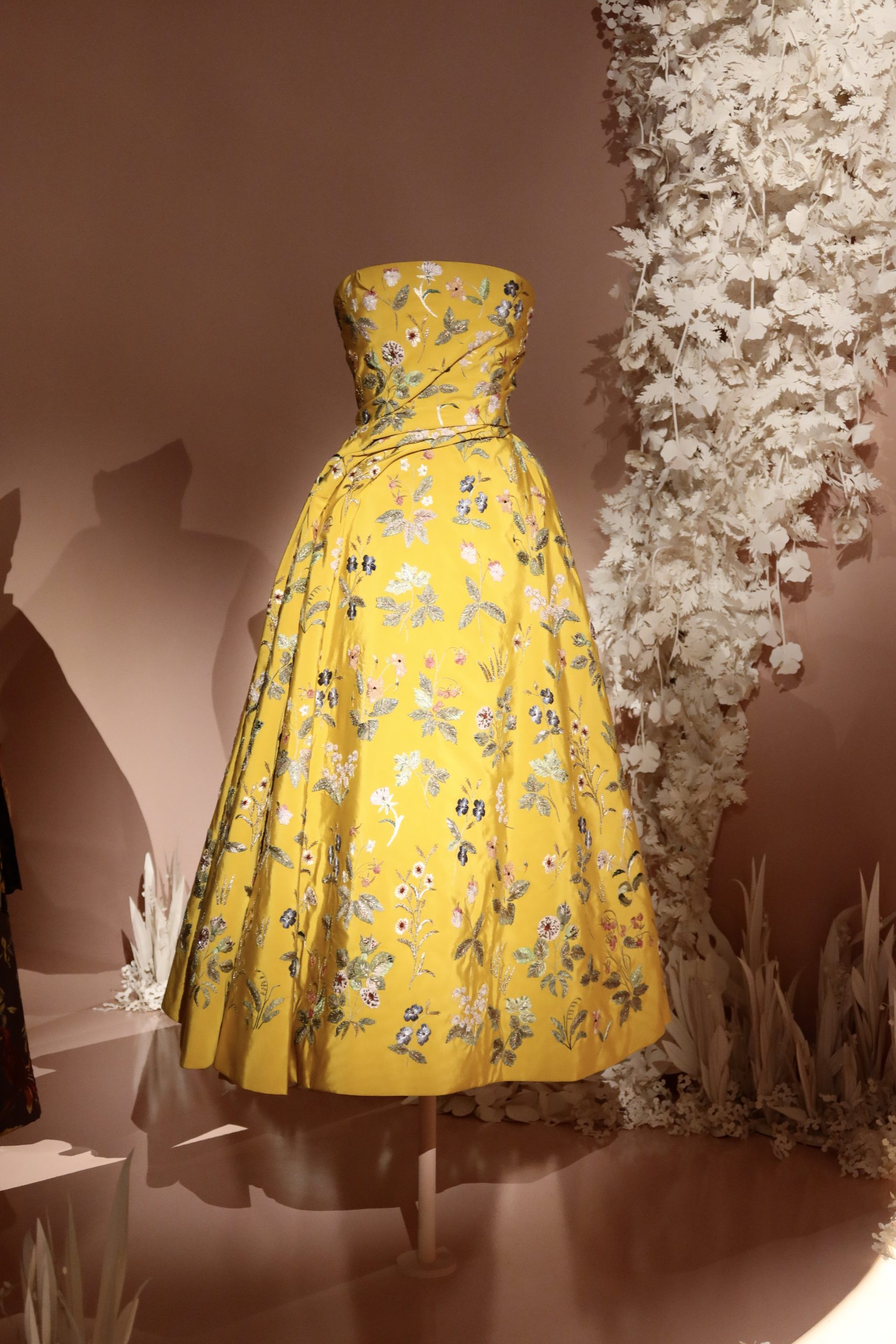
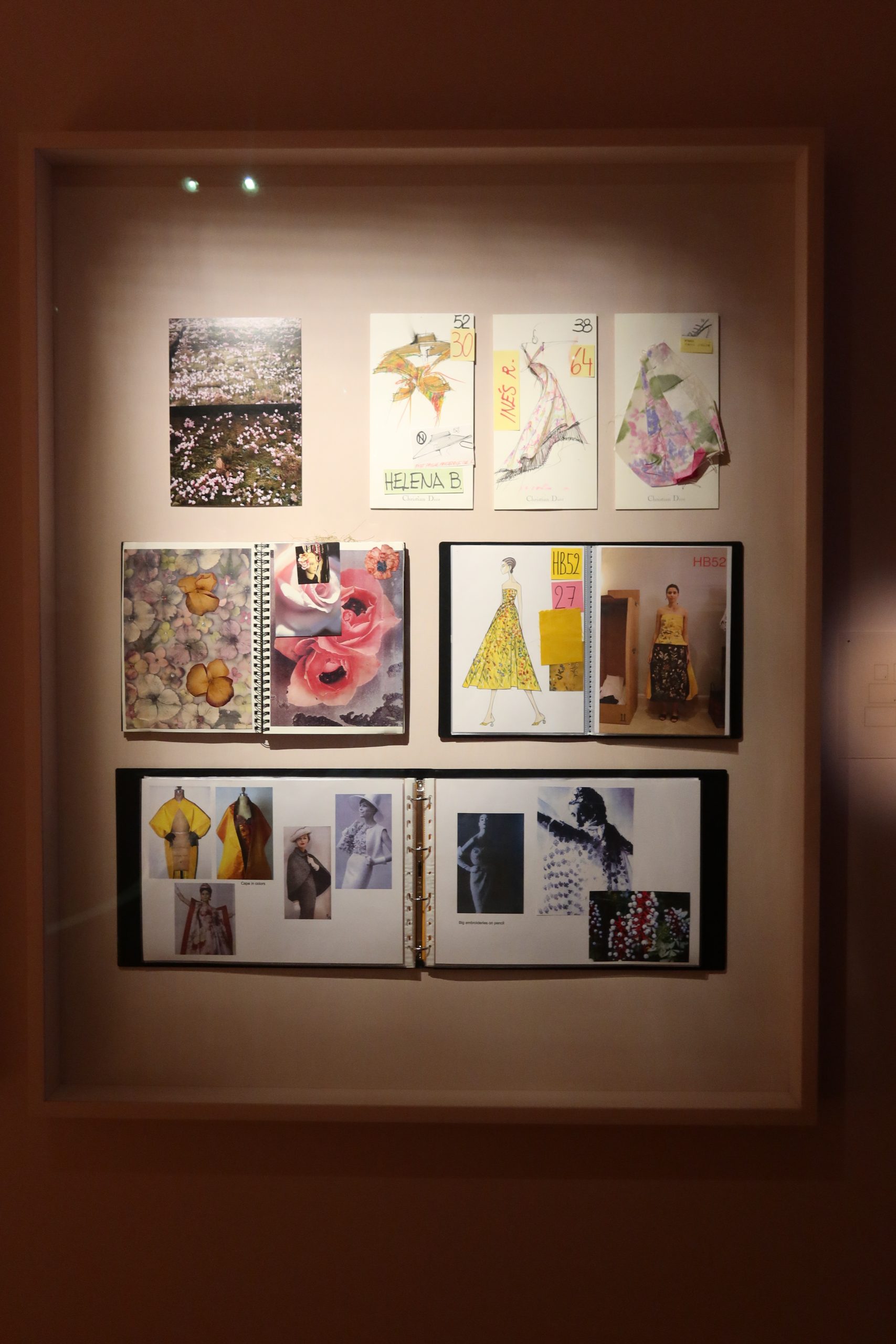
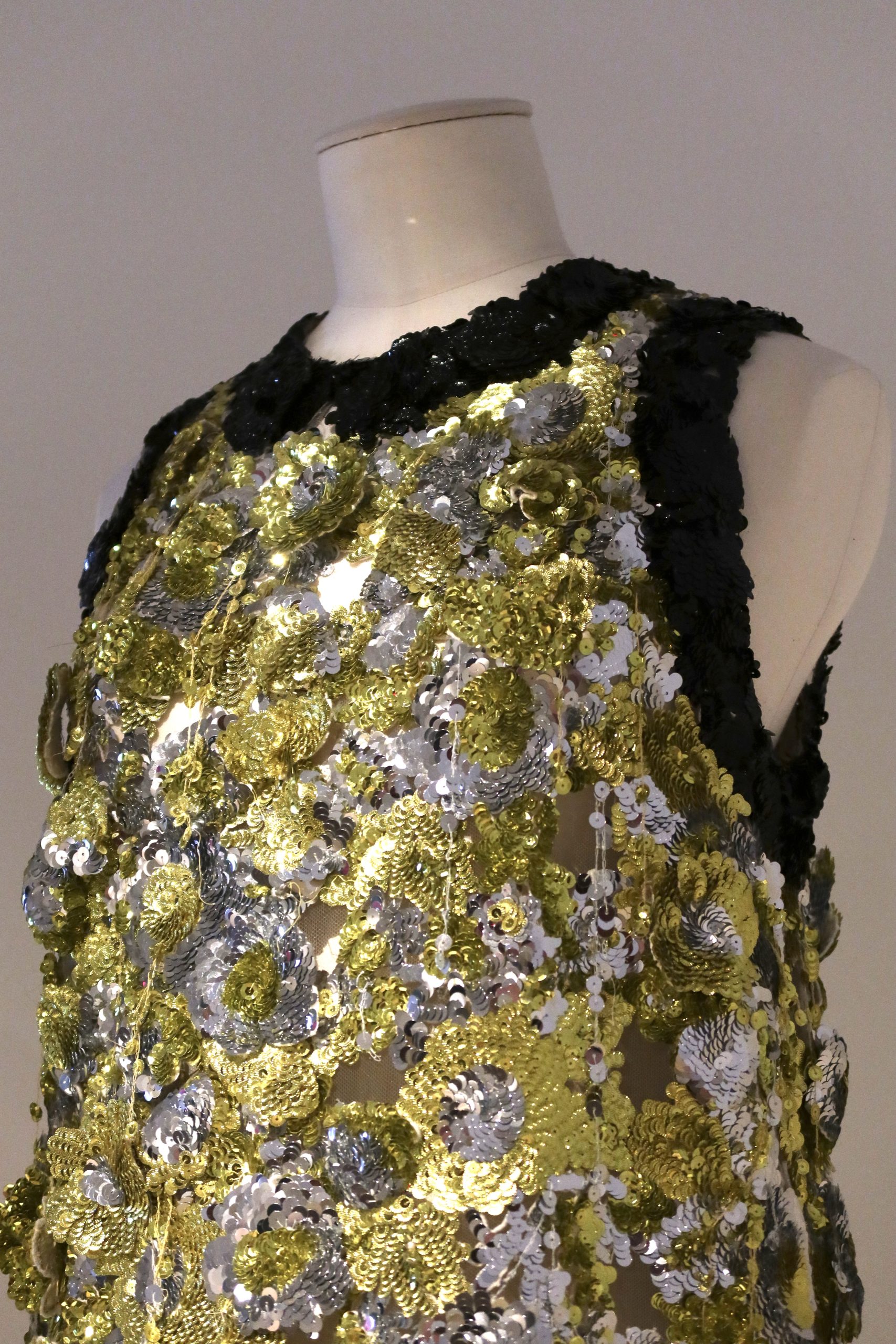
Another display of the creative process is a wall of maquettes, a small version of a design before it is made full-size. This is where viewers can see items like the first Dior perfume bottle with its ornate flower details to represent each of the scent notes. The perfume bottle shows the care and consideration that designers are expected to put into their creations.
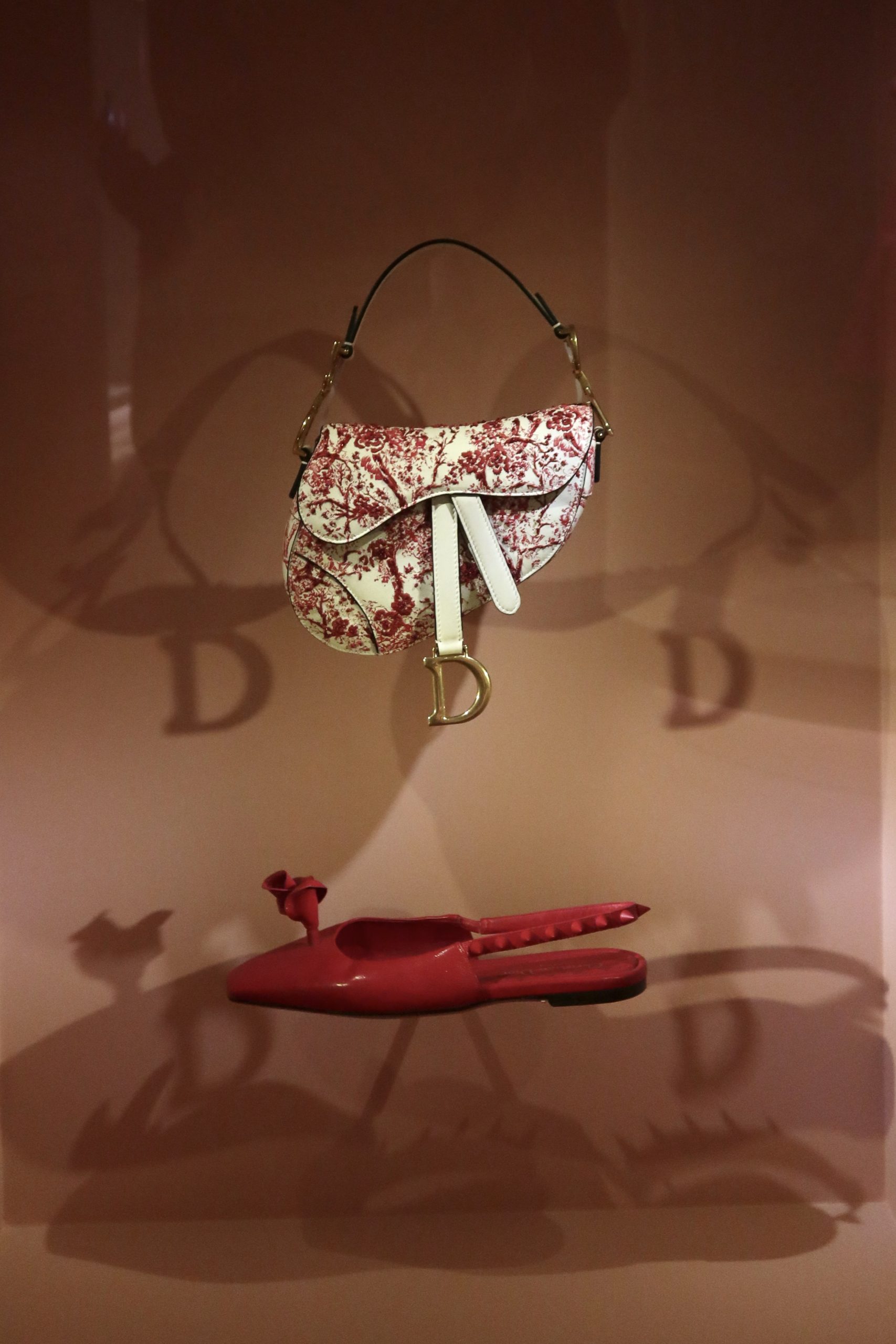
Zone four continues this exploration of process with the “Lady Dior” purse room, where designers from all across the globe have been assigned a Dior bag to fully customize to represent themselves.
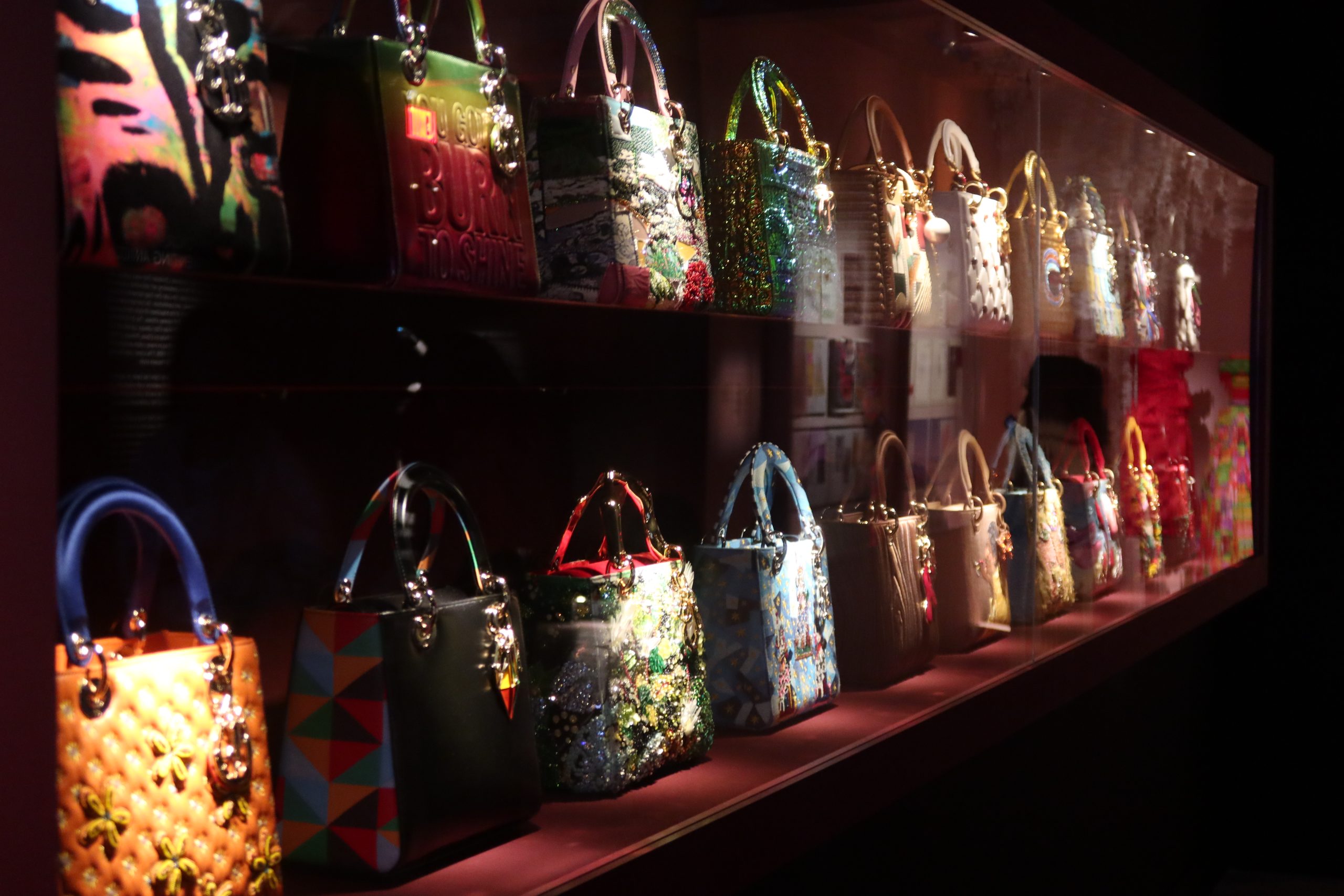
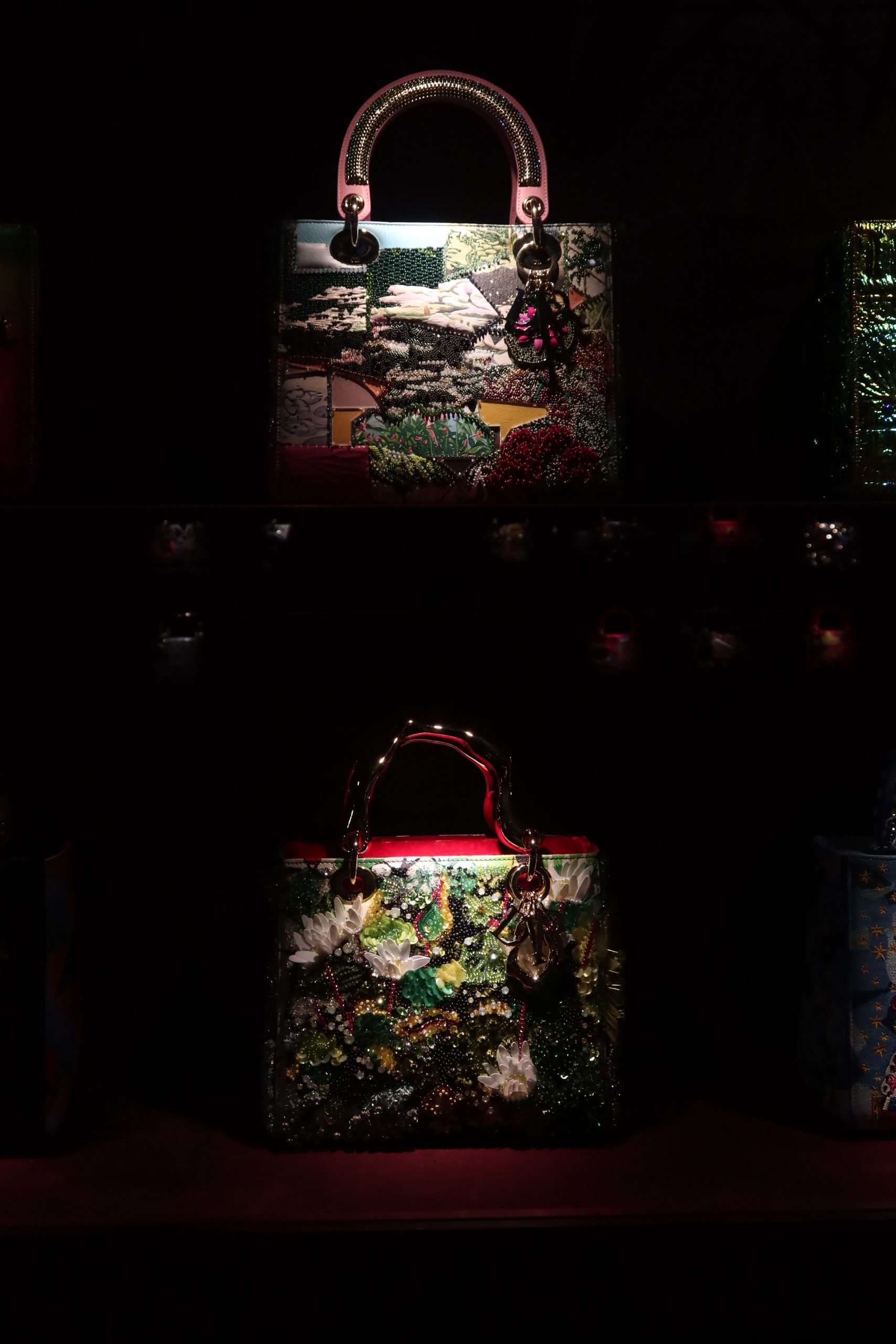
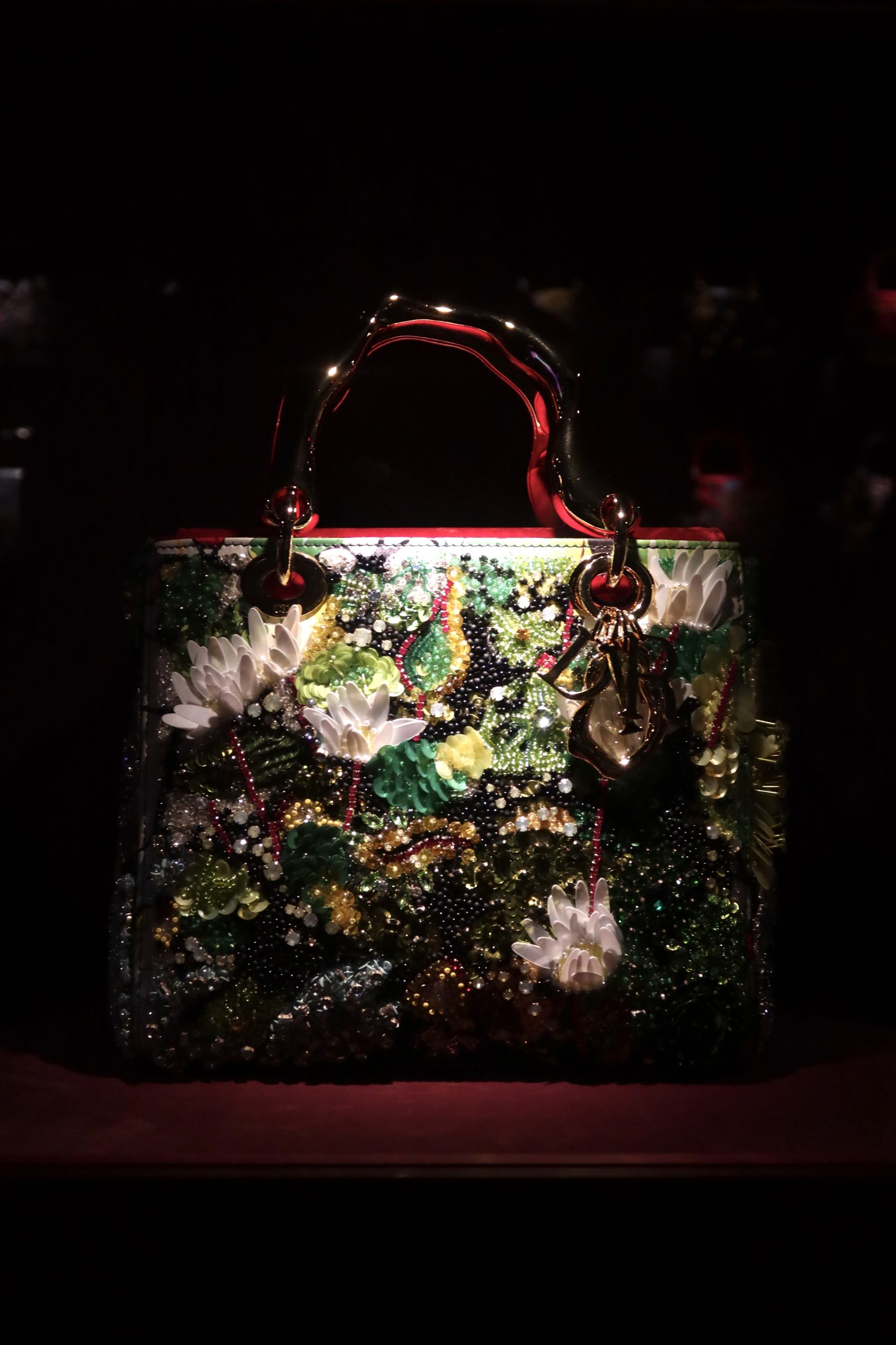
Each bag was handcrafted, and there are more than 40 bags on display from independent designers like David Wiseman, Patrick Eugene, Sheila Hicks, and Ghada Amer. Each one of these individuals was selected for a specific year by the Dior team to bring their self-expression to the bag in a way that only they personally could. While crafting, they are encouraged to stay true to the “Lady Dior” form, but are free to customize the bag charm, face, back, handles, hardware, and sides to reflect the story they want to tell. With every little detail, the importance of thought and research is emphasized, as these factors play a large hand in defining a bag’s unique nature.
In the back of the zone, a video showcasing the artisan work and highlighting the step by step process for the creation of several of these bags is shown, offering an even deeper look into the steps before a final project. These artists have spent hours upon hours embroidering, stitching, painting, and even bedazzling elements of their bags, using unconventional methods of designing to create unique faces that reflect different aspects of their lives. They have come from all corners of the globe to reach a similar goal, all while embracing their creativity and daring to think outside the box. For aspiring creatives, seeing the different ways that designers go about taking a standard piece and making it their own can be really eye-opening and inspiring. It is a demonstration of how expression is just as important as technique in design.
The story of Dior wraps up with curated a section titled “Dior from Head to Toe.” From Christian Dior to Jonathan Anderson, designers craft outfits solely of garments from the Dior label. Visitors have the opportunity to see the behind-the-scenes work through a series of in-process photos taken by Robert Fairer, a backstage photographer for Vogue in the early 2000s. These images are an expression of the work it takes to put pieces together on a human body rather than a mannequin. The models give life to the garments, emphasizing how who is wearing a garment is just as important as what the garment looks like. Models are to designers what paint is to a painter. They need each other. It is a reminder to young creatives of the importance of collaboration to reach their fullest potential.
The final section of the exhibit is a collection of finished Dior designs from 2000 to the present. Having seen the sketches, mood boards, research documents, photographs, and of course, the intricate toiles, this is what paints the clearest picture of why the exhibit exists. Viewers see how Dior has made its mark beyond the fashion world and even transcended into film, with famous actresses like Marilyn Monroe, Rihanna, and Elle Fanning donning beautiful Dior gowns at some of the most important events in their careers. As they represent both themselves and the beauty behind Dior’s craftsmanship on red carpets, there is no mistaking the true power that fashion has to tell a story.
Behind the massive success, flamboyant runways, and revolutionary new looks comes time and craftsmanship, fused to transform the fashion world in ways that have never been seen before. This exhibit underscores how that craft drives success, and the creative journey is just as beautiful as the final destination. It is a reminder to artists of what could be with hard work and full commitment to their craft. To be extraordinary, one must first study, practice, test, and refine. The Dior team has communicated this throughout each zone of the exhibit, and it is this knowledge they have gifted to anyone thoughtful enough to come experience the making of an iconic fashion house.
For more information on this wonderful exhibit, please visit the SCAD FASH website.