Recently, with the news constantly filled with tragic stories of hate crimes, unfortunate accidents, government corruption and a myriad of other melancholic subjects, it can be difficult to find moments to smile or even just temporarily forget all of the pain happening all around us. In 2026, we face increasingly complex and discouraging issues in our day-to-day lives, despite this, people have found ways to laugh through so many of life’s hardships. Of course, discovering how to push on in the face of strife and even find ways to embrace it isn’t a new concept. One of the primary methods for keeping our heads up when we have been beaten down throughout history has been to laugh. Yes, comedy is the water we have used for centuries to wash down our sorrows, and even now we still use it as an aid for scars caused by hard times.
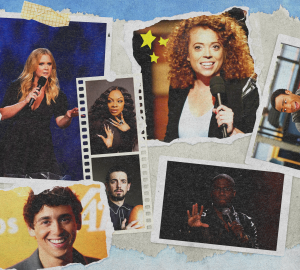
Where did laughing in the face of tragedy come from, though? Is it innate for us as humans? Did we learn that laughter is like a medicine, or has it always been here within us? For many people, some of the prime ways for catharsis lie in arts like writing, painting, and drawing and in hobbies like taking a hike, getting into nature, or even volunteering towards a cause. However, when it comes to writing in particular, many sketch comedians have found it’s a prime way to work out what’s real and unfortunately happening in the world; then break those things apart and find real humor in them. James Belard of Snapsis, a psychological scholar operated health and humanities journal, provides interesting insight into these questions; offering that “In approaching these questions, it helps to note that although audiences often engage with comics as stage performers, stand-up comedians are primarily writers. And as has been discussed on this website in an enlightening piece on trauma literature by Kristina Fleuty, simply writing about tragic events and accompanying emotions can be therapeutic.”

The colors of comedy coming out through writing is something that many comedians seem to have cracked the code on, but what about those of us who aren’t doing stand up every day in front of large crowds? In moments where we sit and laugh at the corruption of the systems that oppress us, changes in our lives that affect our physical and mental well being negatively, or simply any situations that hurt us emotionally, we too are doing the same work that comedians are doing without any extra added thinking.
In these passes with tragedy being turned into comedy in our daily lives, we are plainly and humanly completing a function within us that resets our dopamine so that we will be better off emotionally in the future. Belard offers more insight into this as he highlights clinical research answering the question: “…does laughter in sadness provide additional support? Studies conducted by George Bonanno, professor of clinical psychology at Columbia University’s Teachers College, suggest this is so. In his book “The Other Side of Sadness” he discusses his findings that widows and widowers who express joy more often in the period just after their spouse’s death tend to have better mental health outcomes in the two years following the loss. Bonanno concludes that “People who showed genuine smiling or laughter when they talked about their loss coped better over time.” He suggests this tendency to find humor in dark moments facilitates healthier outcomes by providing a reprieve from constant gloom.
In a world where there may sadly never be complete peace, happiness, and equality for everyone, the thought of this unfortunate human condition may drive one into inescapable sadness. Adding everyday losses and failures on top of that thought only makes life that much harder. Finding comedy in serious situations lets us set ourselves free of living a permanent lifestyle where we are constantly burdened with anguish. Knowing that studies on human laughter and smiling have concluded that the two factors can be supported for us in our daily lives, it’s really important that we learn to use these things as emotional and situational superpowers more and more.
Naturally, there always exists a better time and place for laughter at certain topics, and it’s important to consider that some “darker humor” may not always be ours to openly laugh at. Serious topics, especially those regarding race, sexuality, mental health struggles and violence, are not always appropriate to make light of, especially when the issues do not relate to or pertain to us as individuals. On the opposite side, though, when we have personally come face to face with discrimination or abuse and have those experiences to draw upon, the comedy that comes out of them often really provides a unifying space for shared struggles to be examined, pondered, and then laughed at so that they do not burn quite as much. Perhaps one of the clearest examples of this comes from the Black community with comedians like Keegan-Michael Key and Jordan Peele’s sketches in their famous 30-minute episode comedy series “Key & Peele”.
In their beloved five season long series, Key and Peele navigated some highly sensitive topics for Black Americans, including but not limited to racism, social injustice, toxic masculinity, and cultural appropriation by various people in society. Though these things can be triggering for the community, especially now following the catastrophic events of 2020 with the deaths of George Floyd and Breonna Taylor (as well as the increasing police brutality on Black people in America), Key and Peele still provide a way for Black audiences to laugh at the absurd nature of how unfairly we are treated at times. The jokes did not simply stop at just cracking one liners though; over the series the two developed recurring characters like ‘Mr. Garvey’ and ‘The Valets’ (who were physical representations and reminders of issues Black people have faced in schools, at home, and in the city). When questioned in an interview about Complex, a news outlet by Comedy Central, Peele shed light on the importance of comedy in his own life and the transformative nature that sketch comedy can have on complex situations:
“Do you think comedy has the ability to illuminate important issues while being simultaneously entertaining? Peele: “Oh yeah. The best thing about comedy is that when somebody laughs, there is an epiphany happening inside themselves. Whether they like it or not, they’re realizing something. And if they continue to munch on what that is, they’re thinking and they’re changing the way they think. That has always been the purpose of sketch for me.”
In an extremely interconnected way, Peele restates the importance of comedy in really challenging or even simple situations. The idea of laughter creating epiphanies within us and changing the way that we think about things is exactly what makes comedy so powerful. As humans, we have this superpower that allows us to laugh our way out of darkness. In moments of intense uncertainty or confusion, we can laugh and actively make the choice to smile and override our minds sadness. It’s so pivotal that we take advantage of this skill, especially within our respective communities, so that we can grow and become stronger knowing that we can acknowledge and make positive change out of what hurts us rather than letting that hurt drive us.
It may not be a permanent fix for our concerns, but laughter is a remedy and comedy is a therapy for us to use to thrive. If finding joy in sad situations can actively help us cope and change the way that we see ourselves and the things around us for the better, then it’s safe to say that we need to take advantage of all the laughter that we can get in our lives. Advantageously taking in all of the comedy we can draw from the bleak sections of our lives can serve as a powerful mental treat for us all and allow us to potentially avoid accidentally letting our sadness manifest into deeper hurt. Perhaps taking the time to write about our problems, laugh at them a little, and then let that laughter be what we carry with us daily can inspire us all to have even more strength during life’s hardships and blaze a trail for a brighter tomorrow.