“AI-Powered Production”: Tilly Norwood Takes Hollywood by Storm


“‘Tilly Norwood’ is not an actor, it’s a character generated by a computer program that was trained on the work of countless professional performers — without permission or compensation.” (SAG-AFTRA, September 30, 2025)
The modern film industry is no stranger to the technological advancements of the 21st century. From cameras with automatic zoom to the use of CGI, not only does technology make it easier to produce films, but it also takes them to heights we’ve never before been able to achieve. But what happens when, instead of making humans’ jobs easier, technology takes them away completely?
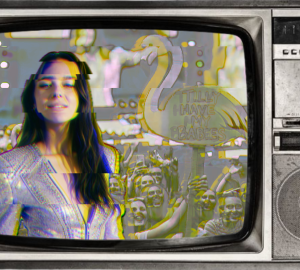
This dilemma has been brought to the forefront of the industry’s attention in recent months- a result of the introduction of AI “actress” Tilly Norwood.
Who is Tilly Norwood and Why is She Such a Big Deal?
A creation of the “AI-powered” production studio Particle6, Tilly Norwood is the film industry’s new up-and-coming talent. Or is she?
The AI character was introduced on September 27, 2025, at the Zurich Film Festival as the first star of a new AI talent division called Xicoia. If it was publicity the company was looking for to launch this project, they sure got it. Almost immediately, the news took the film industry by storm. Social media and news outlets alike flooded the internet with every opinion on the market. But those who supported AI actors quickly had their voices drowned out by the nay-sayers, a group spearheaded by none other than the acting community itself.
It took less than 24 hours for Particle6 founder Eline van der Velden to release a statement in response to the hate. She claims that as an actor herself, “nothing – certainly not an AI character – can take away the craft or joy of human performance.” As a fellow actor, I can admit that when I first heard of Tilly Norwood, I was ready to stage a protest. It seems like AI finds new ways to hijack the creative industry day by day. Despite my resistance to the introduction of AI actors, I found myself agreeing with Van der Velden when she said this. There is a sense of community and an environment that performing brings that a computer cannot replace. It cannot be effectively replicated by a digital program without human experience or emotion to draw from. What it can do is limit the opportunities we have to do it.
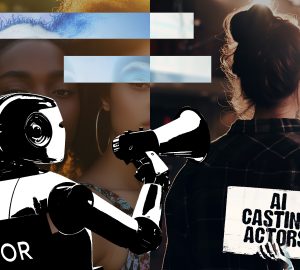
This is what other actors and I fear more than anything. The introduction of AI was bound to happen in some capacity, as we’ve seen time and time again with other industries. But many believed that, like other technological improvements, it would streamline the current processes, making finding and training actors smoother. Now the profession faces a new possibility: actors can seemingly be replaced entirely.
Like any business, film studios play a game of numbers when in production. Behind every major decision is the question, “How can we generate the most profit?” This means limiting resources expended, speeding up production, and, of course, cutting costs. So when the Particle6 homepage claims that AI-usage will “result in up to 50% cost reduction without sacrificing creativity or quality,” it certainly piques curiosity. Combined with the fact that computers are not bound by human needs (food, sleep, etc.) and can work around the clock, the choice to cast an AI character over a human actor may be appealing to a studio.
But, as always, every innovation has consequences. Just because a computer can produce footage based on a prompt does not make it an actor. An actor is taught to portray the real human response amidst fictional scenarios. AI has no concept of the human experience beyond facts and figures. In plain and simple terms, it can never be authentic. Authenticity is one of the things audiences want to see in film and TV. It’s how they connect with the story being told. So, if an audience doesn’t want to see computer-generated footage in place of an actor’s authentic portrayal, productions need to ask themselves, “What is the real cost?”
The Turning Point
By September 30, 2025 the debate surrounding Tilly Norwood had reached new heights. Everyone had their own opinion about what makes an actor and if AI had the capacity to be one. It was then that SAG-AFTRA made its way into the spotlight. They released a statement that had actors across the country letting out a sigh of relief: “Creativity is, and should remain, human-centered. The union is opposed to the replacement of human performers by synthetics.”
Since then, the union has continued to fight to keep actors the number one choice over artificial intelligence. SAG-AFTRA’s chief negotiator, Duncan Crabtree-Ireland, has been outspoken regarding upcoming 2026 contract negotiations since the beginning of January, mentioning in a recent interview with CES that “AI will for sure be an important topic” brought up in these negotiations. It has also been noted by numerous sources, including The Hollywood Reporter, that he plans to make hiring a “synthetic performer” or an AI character as expensive as hiring a human actor. This lack of cost reduction will ideally dissuade studios from pursuing generative AI in production. If this negotiation comes to fruition, it will be a huge win for not just actors, but all creatives working in the industry.
Despite actors being the focus of the AI character debate, it’s important to realize that they aren’t the only ones affected. What about the camera operators? There are no cameras to film with if the footage is produced by a computer. Or the sound mixer, whose job is to capture audio when not pre-recorded by software? Even the costume designer would only be prompting the program and hoping it would produce the garments as envisioned. Film is a collaboration. It requires a large variety of specialized roles to make everything come together. Everyone relies on each other to do their part, so if one of those parts changes, they all have to accommodate. By fighting to preserve actors’ roles, the union effectively protects all creatives in the industry.
Final Thoughts
While the job of the actor doesn’t seem to be going anywhere anytime soon, there is a distinct shift taking place in Hollywood. Tilly Norwood is just the beginning. The film industry will continue to adapt to the ever-changing world of technology, and it is up to us, as the new generation of creatives, to determine if we will work with it or against it. Hopefully, by keeping collaboration and creativity at the center of storytelling, technology can be used to support the people who make films possible rather than replace them.