Behind The Scenes: Embracing Non-Traditionalism

By Indiya Spann
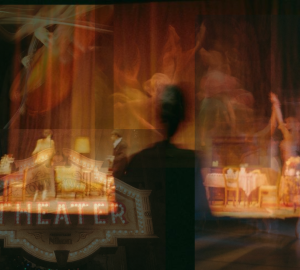
For Calivan Miller, the theater is a place of revolution. The SCAD Atlanta film and TV major is embracing this idea as he takes on the responsibility of stage manager for the Shakespeare in the Court production of “A Midsummer Night’s Dream.”
Stage management functions as a sort of all-seeing eye that micromanages each step of the process. According to The American Association of Community Theatre, stage managers often schedule rehearsals, communicate the director’s vision to production designers, coordinate the work of the stage crew, and oversee the technical side of a show during performance.
With the nature of “Shakespeare in the Court,” the stage becomes something more conceptual. There’s more room to play with the ideas of what the stage is. “Our set is our SCAD space. Using a draped cloth to simulate a wedding altar. These are used to tell the world of the story through more abstract means,” Miller said. “We don’t have to physically build a tree or a night club or a castle, we can understand a location and a world just based on a few set pieces.“
The play is literally about magic, but Miller sees the theater as its own kind of magic.
“Theater can break barriers in many different ways,” he explained. The nature of the collective thought around non-traditional theater set-ups is inherently queer. As a stage manager, crafting an almost surrealist experience becomes imperative to the imagination of the audience, as you are calling them to imagine with you.
If the performance doesn’t end on the stage, where is the invisible line between the actor and the collective? Blurring the lines between reality and performance isn’t something unique to contemporary performances, but it is emphasized by them. The queer nature of performance art helps us deconstruct social constructs and imagine a different world.
“Many of the royals are rigid and forced to be closed up by the block while the fairies are free. [The fairies] remind me of a lot of drag queens, especially Oberon and Puck. They express themselves openly with little care for what others may think.”
The first conception of drag queens stemming from a man playing a female role because of the patriarchy, then turned into a way to disintegrate social constructs around gender. In Daniel Simpson’s article “The Synergy Between Queerness and Theatre,“ he explains, “For queer and trans identities to be taken seriously in academic discussions, there may be an expectation to perform gender in unconventional ways. This makes me think of when I have seen drag queen performances; they don’t mimic the behavior of an ‘average female,’ if such a concept even exists, but instead present a heightened feminine expression.”
This queer-rooted interpretation of the magical ”fairy world” adds to the progressive collective of this show. Through mechanically breaking down each part of the set you can start thinking about the specifics. You can truly feel the amount of hard work and intentionality Miller pours into his role as the stage manager of ”A Midsummer Night’s Dream.”