Love and Feminism: Shakespeare Edition

By Yasmin Cowan
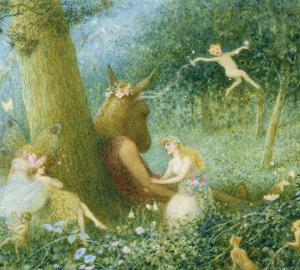
On May 14, Savannah College of Art and Design will launch ”Shakespeare in the Court,” the first outdoor production in SCAD Court for the School of Film and Acting. As they prepare for their performances in “A Midsummer Night’s Dream,” acting majors Jordan Stephens and Kanari’l Tolbert reflected on the positives and challenges brought by their characters, how their generation shows love, and the play’s unexpected stance on feminism.
Stephens plays the young lover Hermia and Tolbert takes on the role of Hermia’s father, Egeus. “In most plays written by Shakespeare, he likes to challenge society,” Tolbert said. “It’s interesting how Hermia should have conformed to her father, [but it] was one of those instances where she didn’t. It’s really cool to see that back then, there were still people at play trying to make it easier [for women].”
In the 16th century, women were commonly seen as objects belonging to their patriarchal families, leading to the belief they couldn’t fight for what they wanted. However, Hermia was written as a polar opposite, which Stephens proudly acknowledges.
“She’s headstrong and has a big heart,” she said. “I feel like any sort of passion comes with a wide range of emotions, like anger and deficiency.” In a world where people treated a woman as something delicate, easily tainted by sin, this was unheard of. However, the Stephens talks about Hermia with admiration, is something to take comfort in.
Stephens sees Hermia as an “independent girl who’s fallen in love,” which is something she can relate to. Although, personal connection doesn’t erase the challenges that can come with performing such a big role. “I would say it’s definitely more challenging than the other roles I’ve portrayed because it’s in a different language,” she said. “You understand the circumstances of the scene quite well, but it feels like some things get lost in translation, like a language barrier. It feels like a lot of pressure, but it’s really exciting.”
With Tolbert’s character, she reflects on not only portraying a male figure stepping in the way of Hermia’s love life, but also playing a male role as a woman. Tolbert doesn’t describe herself as an Egeus-type person, so her approach to the character is to focus on embodying his confidence.
“It’s difficult, because it’s me having to be a man, and I have to make many decisions about what I would do to play that? Or do I want to play as a woman in a man?” she said. “I feel like I’ve had to take away all that I’ve known previously to acting, so I’ve been lost and trying to find myself again, but it’s fun figuring it out.”
Despite this initial challenge, Tolbert tries to focus less on his gender and more on the parts of her life and personality that contrast with his. “I don’t have a daughter, and I’m not in a position where I want to boss people around,” she said, laughing.
This idea of contrast goes hand-in-hand with her views on the role gender plays in modern society’s views on love. “It’s always negative, like, ‘a man’s gonna do this, that’s just what he’s gonna do, it’s gonna happen once in your relationship.’ I’m thinking, no, this is my life, it doesn’t have to happen.”
The modern views on love could be influenced by the media. It’s framed in a way that leads most people to either see the worst in others or just give up on love as a whole. “People don’t fight for love nowadays,” Tolbert said. “Back then, they were willing to run away from their families. People these days don’t wanna lose anything for the sake of someone that they could love; they give up really easily.”
Fortunately, this is not the case with Hermia’s relationship with Lysander, who Hermia percieves as the man of her dreams. “She has someone who’s willing to fight for her,” Stephens said. “You have two people so dedicated to each other that they’re willing to risk it all. I think now because of social media, the way love looks has been so set in stone so people think that it only looks one way, either unrealistic expectations or pessimism.”