The Fire at Forty and the Emergency Communication Students Desire at SCAD Atlanta

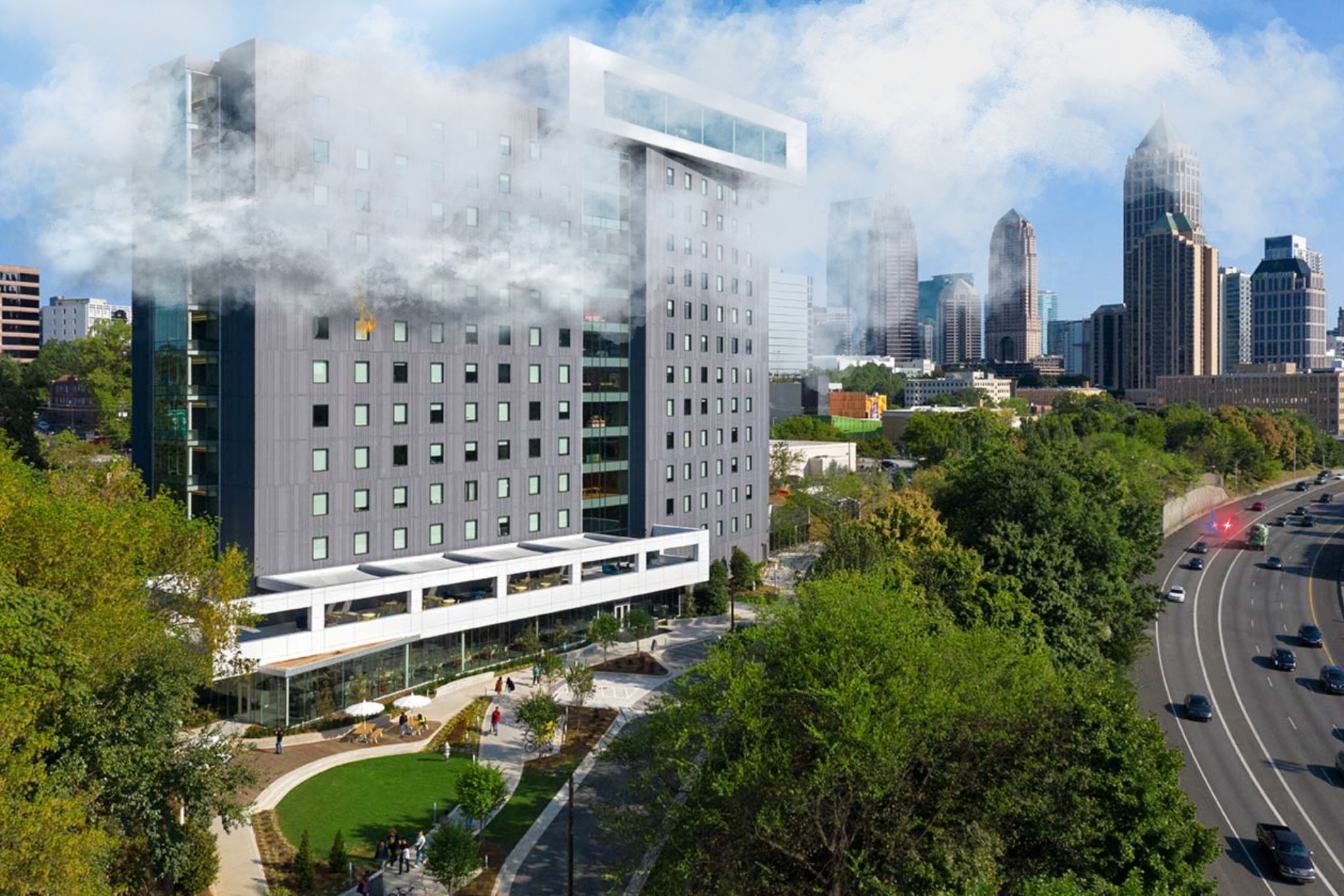
Monday, April 27, students living in the FORTY residence hall on the SCAD Atlanta campus were made to evacuate the building, leaving many in a state of dismay. Around 2:30 p.m., a fire sparked, the result of a lithium battery explosion in one of the seventh-floor dorms. Officials said the fire was small and contained to the room where it started before being extinguished by the building’s sprinkler system. Despite this, students were prohibited from reentering the building for about four hours while the Atlanta Fire Rescue Department and campus officials assessed the damage.
While the fire itself caused significant damage to the room where it originated, it was the water damage from the sprinklers that resulted in the majority of destruction throughout the building. Smoke from the explosion triggered sprinklers on the seventh floor, and the water quickly spread to the floors below. Many dorm rooms on floors two through seven were deemed unsafe for continued occupancy.
Videos emerged showcasing the damage: floors pooled with water, soaked concrete walls, and ceilings that looked like they were at risk of caving in. Even as reports and videos began to surface, students said they received limited information about the cause, severity, and extent of the damage. Instead, they were simply told to stay away from the building.
Across campus, displaced students gathered in common areas, awaiting updates on the condition of the building and their belongings. Some clung tightly to pets that had been rescued from the building in blankets, and others clutched their school bags with the fear that it was all they had left. Students said they received little additional information as they waited for answers about housing arrangements and the extent of the damage.
An hour after the fire had been extinguished, students received a text message from SCAD Security that read: “SCAD ALERT: Students impacted by the fire at the FORTY residence hall will be contacted by SCADhome for housing accommodations.”
Around 6:30 p.m., residents of FORTY were allowed to reenter the building. Students whose rooms were deemed unsafe by campus officials were temporarily displaced and relocated by SCAD Safety and SCADhome.
One student who had been living on the seventh floor said she was temporarily moved to a room on floor 12. According to the student, when she asked to briefly return to her room to retrieve her car keys and a change of clothes, security denied her request, instead directing her to speak with SCADhome. She said the experience left her feeling uneasy.
The student described arriving at her temporary room with “a sack of what was meant to be bedsheets and night gear.” Like many displaced students, she said she was unsure whether her belongings had survived the fire and water damage.
On April 28, displaced students were given limited access to their rooms and instructed to follow move-out procedures to the best of their ability. Some students were relocated to unoccupied rooms on the higher floors of FORTY, while others were moved to FORTY FOUR or FORTY FIVE. Some students made the decision to leave campus altogether.
Madison Montage, a student relocated from the fifth floor of FORTY, said she first learned about the fire through her roommate while she was away from campus.
“I was not here when the alarm went off,” Montage said. “I was at home, and I had to learn through my roommate that they were evacuating everyone.”
Montage said she later learned more details about the fire through a Discord server for her residence hall. She said students received limited updates from SCAD while waiting to learn whether they would be allowed back into the building.
“At first, it was an hour, then we were told, ‘You can’t go back,’” Montage said. “Then it became, ‘We may have an answer for you at nine.’”
When she left her dorm before the incident, Montage had no reason to think twice about the state of her belongings. But sitting at home with no updates, no details from SCAD, and limited information shared on the Discord, she realized her possessions may not be as safe as she thought they were. She was able to recover important items like her wallet and stuffed animals. However, the bulk of the damage in her dorm was to the bathroom, resulting in the disposal of her toiletries and other personal items.
“They got rid of the bathroom towels and shower caddy — all of my new shower essentials. When I finally closed the door, it was as if no one had lived there.”
With so many individuals losing a significant portion of their belongings, SCAD students banded together to raise awareness about the situation and provide support to their peers in need. LeRoy Ellis, a first-year student displaced from the third floor of FORTY, played a leading role in organizing donation drives to help students replace clothing and personal care items lost in the fire.
When asked how he felt about the university’s communication with affected students, Ellis explained that the situation was far from ideal. “I believe that the communication was very slow,” he said. “I got most of my information from security staff because I kept repeatedly asking questions, but I know many students who did not do the same.”
Ellis also acknowledged efforts by SCADhome to provide emergency supplies to displaced students.
“I think that SCADhome’s response in providing sheets and toiletries was kind,” Ellis said. “I personally felt more compassion from my peers than from SCAD as an operation, but it also reflects the community students created by coming together during a difficult time.”
It was clear from Ellis’ response that his peers offered him lots of support during the difficult time. Students fostered a positive environment through community, dedicating their time and resources to support fellow students. Nonetheless, it is still concerning that people were receiving towels and blankets but no answers as to what had happened. As a resident of FORTY myself, I agree that SCAD security and the emergency response team seemed to withhold the majority of information surrounding the fire.
Another student that continually sought out answers to what had happened was Elcy Feliciano Knies, who lived on the floor where the fire occurred. “During the incident, I asked a security guard for information, and he gave clear details specifically on when we could return,“ she said. “However, his higher-ups completely disregarded students’ emotions and feelings on the matter as they denied answers to many students’ questions on the state of the damage.”
Even now, questions remain about the extent of the assistance the school is providing affected students.
“There has still been no public word about SCAD assisting students directly. … Overall, I personally felt that SCAD’s handling of the issue, communication-wise, reflected a lack of personal care for students’ concerns. I am extremely displeased with the way our school chose to handle the communication.”
Weeks later, there is still no public statement from SCAD on the extent of the damage or the estimated repair time. Students have turned to news outlets like WSB-TV 2, who were outside of the school only hours after the incident, to fill in the gaps because reporters appear to have more information than students have received from the school. Even now, local news outlets such as the Atlanta Journal-Constitution continue reporting on the incident and its aftermath.
Although the fire has been the most recent emergency on campus, it is certainly not the only scare the SCAD Atlanta campus has dealt with. Thursday, March 12, the last day of winter quarter, students and faculty received an emergency alert concerning an armed person “in the vicinity” of the campus. Less than 30 minutes later, a follow-up message was sent out: “SCAD Atlanta can resume normal operations.“
Moreover, on Tuesday, May 5, at 11:30 a.m., the fire alarm went off again in the FORTY residence hall. Many students, unaware that it was a false alarm, panicked about another fire as they descended the stairs. After students evacuated the building, workers explained that it was a false alarm, continuing what students described as a pattern of not actively communicating important information to students in times of need.
Though it is important to limit panic during emergencies, a lack of information seems to have the opposite effect. For many, vague and infrequent updates during emergencies heighten their concern. Students say they feel increasingly uninformed about on-campus incidents and are urging campus security to provide more immediacy and detail in emergency updates going forward.
Overall, the fire was perspective-altering for many students, teaching them to seek answers in times of uncertainty and rely on their community for support. Many students believe that the way the situation was handled revealed serious flaws in SCAD’s emergency communication system. There should be adequate, reliable communication in place for when events like these occur. With time, hopefully SCAD will come to understand how much students desire clear, detailed communication and the university can improve its emergency protocols.