The Expansion of Data Centers and the Unification of American Environmental Concern

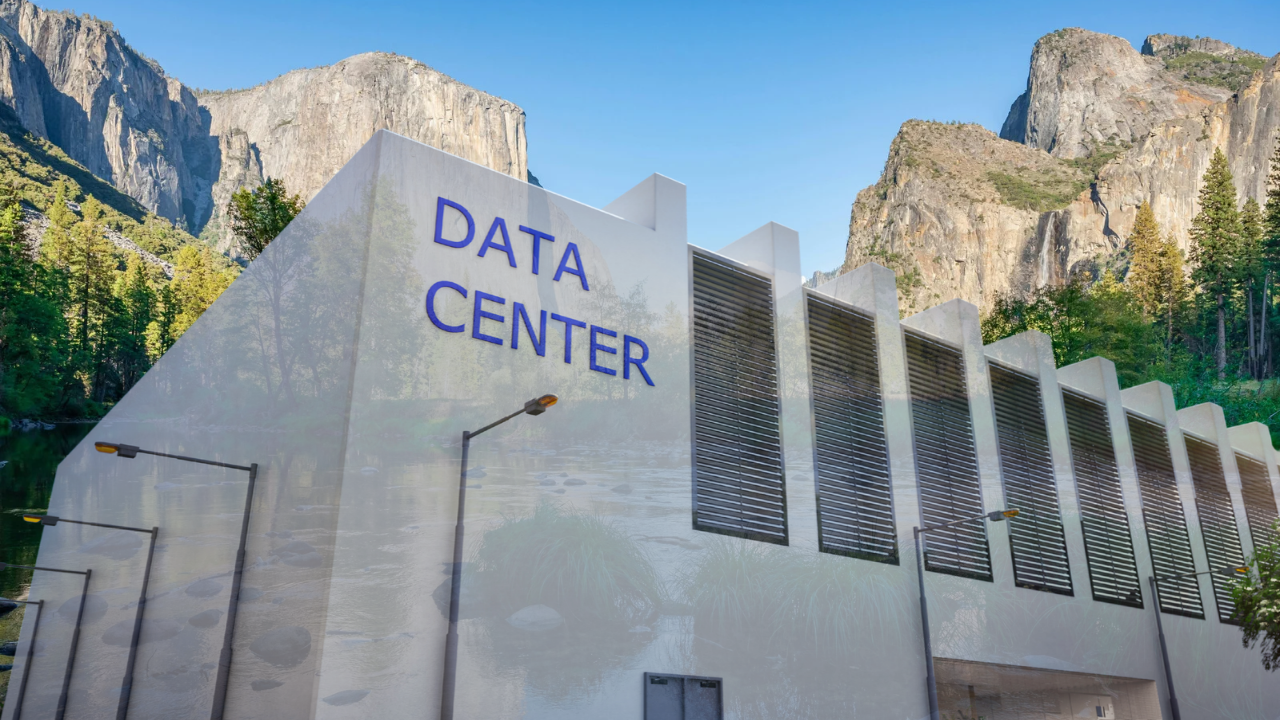
As midterm elections draw closer, many American citizens are carefully considering the social and environmental impact of their votes. One of Americans’ biggest environmental concerns is rising global temperatures and whether Earth will remain hospitable for future generations.
Historically, climate change has divided the Democratic and Republican parties, with many debating the urgency and validity of each concern. Disagreements over how to address climate change, the type of energy to prioritize, and the overall dismissal of the problem have driven a deep wedge between the environmental stances of left- and right-wing voters.
As the country revolutionizes with AI and technological advances, a new shadow of fear and concern about the environment has fallen over Americans because of the growing number of data centers planned for development across the country. Unlike global warming, the construction of more and larger data centers has united many Americans, Democrats and Republicans, in growing disapproval and concern about the energy these powerhouses consume and where they get there energy.
To understand the fears surrounding data centers, one must first understand what they are. Companies like Microsoft Corp., a powerhouse computer and software development company and a prime builder of data centers, explain in its article “What Is a Data Center?” that “A data center houses thousands of powerful computers, or “servers.” Microsoft data centers have rows and rows of these servers, working around the clock to allow your information to be ready whenever you need it,” as they explain on their website. They go on to detail the benefits and uses of the centers, writing that, “Data centers provide the physical infrastructure for the technology we depend on at work and in our personal lives – from the life-saving work of doctors and first responders to online banking and remote work. They power everyday life, including online education, local businesses, government, hospitals, video calls with family, and deliveries to your doorstep. Whenever you browse the internet, place a Friday night pizza order, upload photos to social media, check emails at work, or even read this article, you’re relying on a data center operating somewhere in the world.”
Microsoft is saying that data centers are powerful tools that enable technological intelligence and ensure people’s data is properly backed up, something almost everyone appreciates in their daily lives. As more work and personal data moves online, many people’s lives and careers are stored on drives, in their computers, and within their cloud. As Microsoft explained, these data centers protect important digital information, so at their basic level, storing and recovering digital information seems relatively harmless. However, as more people rely on the internet and technology, concern and fear grow about the sustainability of these powerhouses and their impact on our planet.
Although their environmental impact is just now being considered a daunting issue, data centers have been around since the 1990s. Their origins trace back to as early as the 1940s. Ecconex, a custom technology innovation company, has published informational articles explaining that data centers first primary purpose was for U.S. governmental and military services. Even then, they relied on environmental means.
“The first data center (called a “mainframe”) was built in 1945 to house the ENIAC (Electronic Numerical Integrator and Computer) at the University of Pennsylvania. Additional facilities were built at West Point, the Pentagon, and CIA headquarters in the 1950s. Because the ENIAC was used for defense and intelligence projects, secrecy and security were important. The data centers also had huge fans and vents to cool the massive machines. Even the first data center needed to consider airflow and cooling.”
From the start, data centers required cooling. The more information and data a center stored, the more heat it generated as to run and process the information. This led to solutions that supplied the necessary cooling to keep them functioning, using resources such as fans and water. Back then, the number of data centers, the amount of data they stored, and the energy required to power them were not nearly as extensive as they are today.
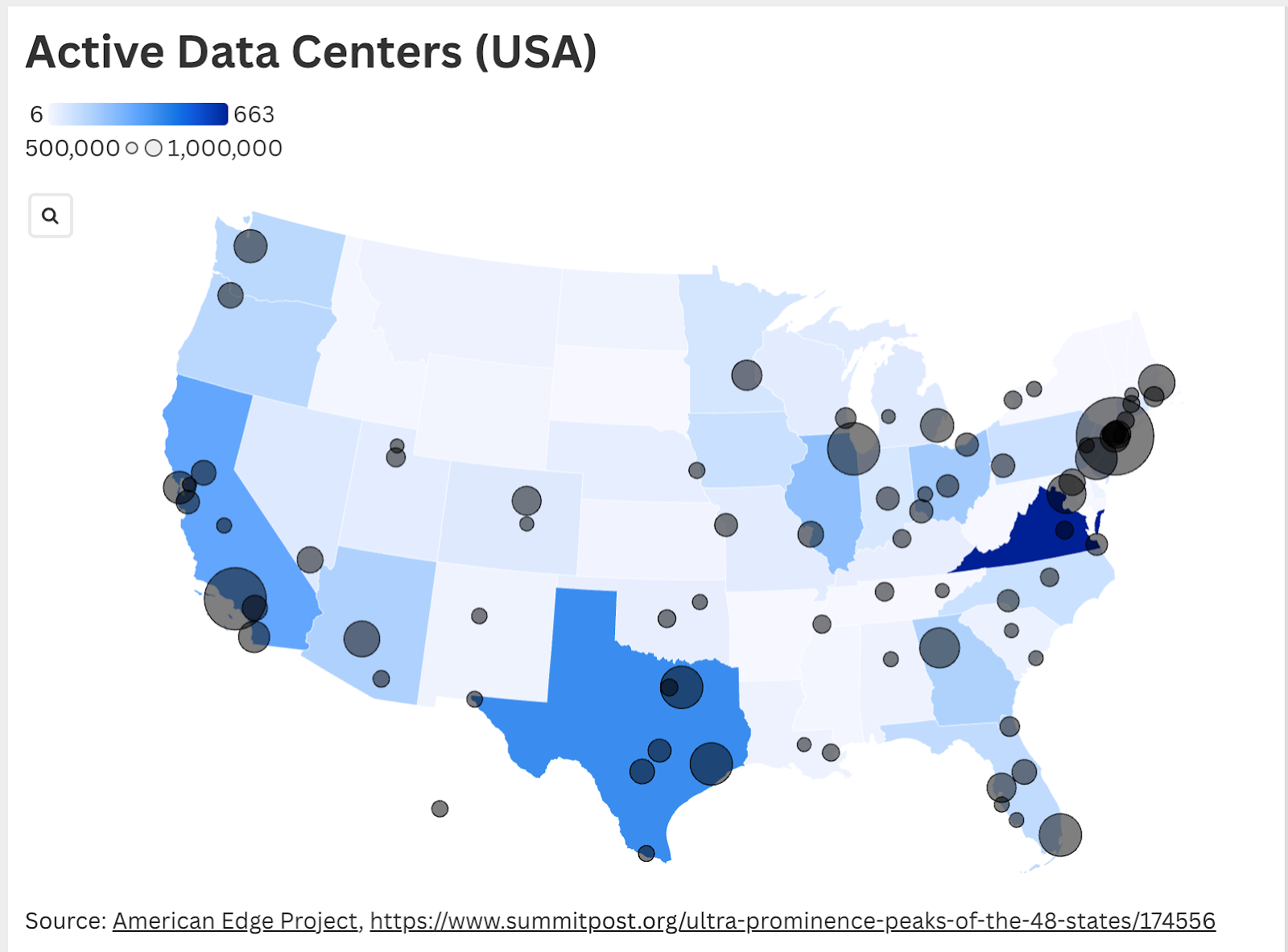
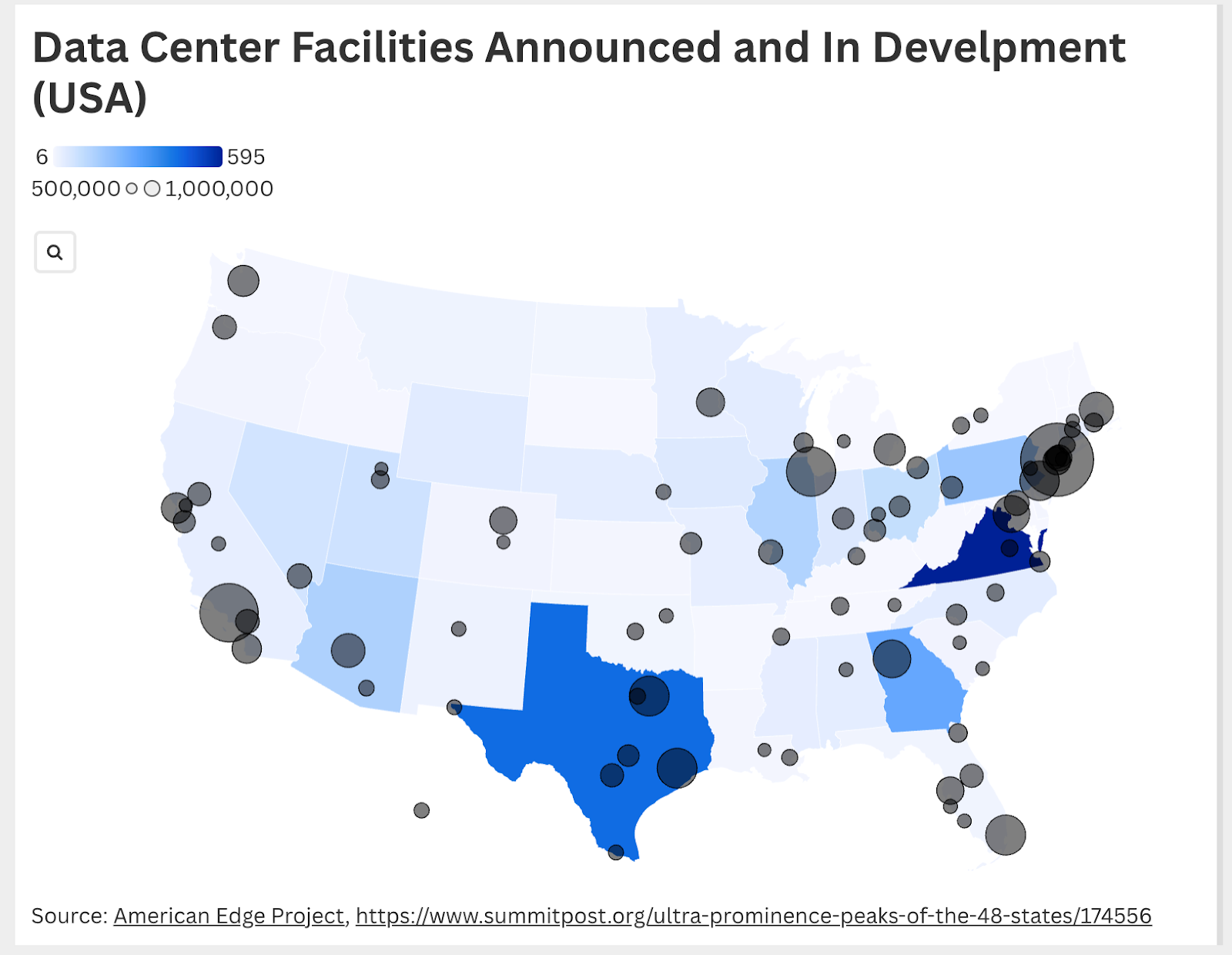
Recreated Axios Newsletter maps. Graphics courtesy of the American Edge Project.
Although the map’s color legend suggests data centers are increasing access to America at different rates, Georgia and Pennsylvania underscore a surge in center expansion toward the eastern and southern states that was not as favored before 2025. For Georgia specifically, upon even closer inspection of the map, one sees that the planned centers are near cities like Covington, Conyers, Douglasville, Fayetteville, and Newnan, as well as Union City and Warner Robbins, all of which have multiple operational data centers planned. These Georgia cities are relatively small, densely settled, and offer greater affordability, close proximity to grocery and general stores, and, of course, abundant natural resources. The southern soil and water have always been thought to be clean and abundant, which now makes them the “perfect” places to build up large, energy-consuming data centers.
Introducing new data centers near these smaller, rural areas could jeopardize the very amenities of southern living that so many rely on every day. Clean, fresh water and clean air are necessities everywhere, and they are also prime reasons people choose states like Georgia to raise families and deepen their roots. New data centers could steadily deplete these resources, and the cost of living could skyrocket. These rural areas are suitable for centers for the same reasons they are suitable for families: they have relatively affordable land prices in America, an abundance of clean water and fresh air, and year-round climates that are highly favorable. However, if and when these new data centers are built, they will slowly deplete these benefits, as seen in areas where data centers have been operating for longer.
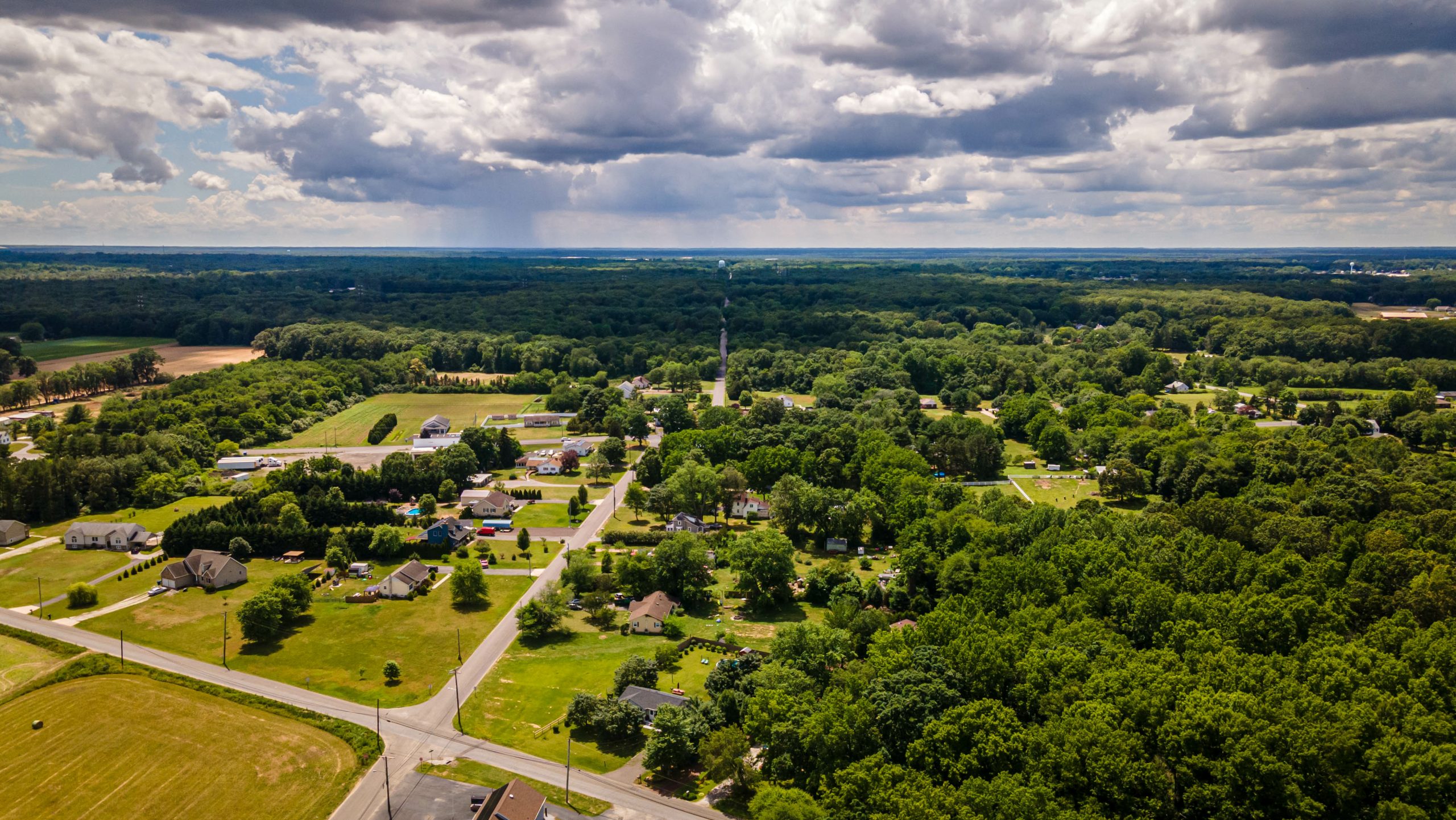
As data centers are supposedly being built in such large quantities on an even larger scale, they will take these resources from people more and more, in unsustainable ways and, in worst cases, even inhumane ones. Water is a finite resource, and setting more of it aside for data centers, both statewide and nationwide, could mean Americans everywhere have less access to the water they need.
Interestingly, many sources have cited the centers’ locations as being related to areas of food deserts and water shortages, like many smaller cities in rural areas, and Ceres.Org, a non-profit, sustainability-driven nature organization, in their article titled “Drained by Data,” reveals a negative revelation on the environmental impact of data centers functioning, making a striking connection between where centers are being built and who they are driving out.
“Moreover, the report examines the cumulative impacts of clustered facilities in a small geographic area—often in already water-stressed areas. Data center growth could increase water stress in already strained basins by up to 17% annually—with even higher spikes in peak seasons.”
The companies that own data centers—Google, Microsoft, Oracle—are multimillion-dollar industries, and their leadership teams take careful consideration of where they are building these centers so that they can maximize profit at all costs. They disregard the fact that they are actively driving people out because that ultimately creates room for more center expansion.
To make matters even more concerning, many of the companies behind data centers have recently come under fire for using NDAs in coordination with local governments to hide the extent of the damage their centers are causing to the public. NBC News ran a story highlighting the sneaky lengths technology companies go to secure land for their data centers. In the article, “How NDAs keep AI data center details hidden from Americans,” NBC News reported on Dr. Timothee Grosser, a farmer in Virginia, who was offered $10 million for his 250-acre family farm on the condition that he sign an NDA about the land’s use. He was offered this NDA by a man who claimed he represented a Fortune 500 company but would not reveal his name or the company’s name.
According to Dr. Grosser, the deal required him to never speak of the exchange or reveal the project’s details to any third parties in exchange for project timelines, purposes, or size. The company’s representative simply said the deal was only on if Dr. Grosser signed the document and agreed to its terms, which he refused. Dr. Grosser’s story shows the lengths these companies will go to avoid being exposed for the shocking environmental havoc they are wreaking on the land. The idea that these companies, in positions of such power with so much money and sway over the government, are shadily trying to make deals for more and more land with fewer details each time, is rightfully frightening for many Americans, Democrat or Republican, who live on land being sought after for data centers. Dr. Grosser’s situation shows how his good judgment and refusal to give away ownership of his land allowed him to remain in control. However, for many Americans, especially those in rural areas with limited access to water and in metro areas, the introduction of a data center into their space often means being forced to relocate for environmental and financial reasons.
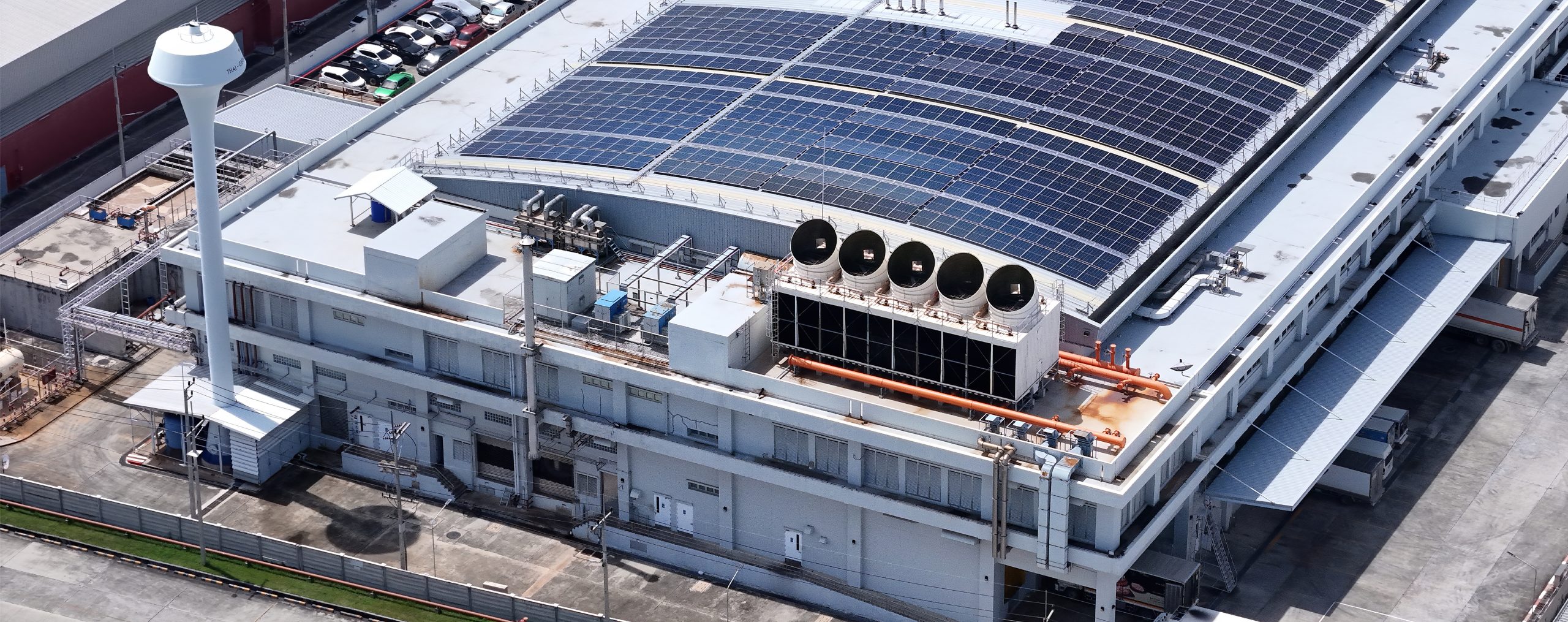
Beyond energy and water, running data centers also requires a vast amount of money. Research and census data across various sectors indicate these data centers operated by Google and Microsoft can generate up to $10 million in annual revenue. The American government is also well aware of how much it costs to run these centers. Instead of questioning these numbers, leaders have been seen to be capitalizing on them, regardless of the detrimental environmental and social impacts they cause for everyday citizens.
Driven by the economic prosperity the center’s companies promise to bring, leaders like President Donald Trump continue to support the development of data centers in any way possible. Primarily by granting them free access to government land. On the White House’s official website, under the presidential actions tab, located in section one, policy and purpose, of the “ACCELERATING FEDERAL PERMITTING OF DATA CENTER INFRASTRUCTURE” initiative, President Trump declares that, “We will pursue bold, large-scale industrial plans to vault the United States further into the lead on critical manufacturing processes and technologies that are essential to national security, economic prosperity, and scientific leadership. These plans include artificial intelligence (AI) data centers and infrastructure that powers them, including high‑voltage transmission lines and other equipment. It will be a priority of my Administration to facilitate the rapid and efficient build out of this infrastructure by easing Federal regulatory burdens. In addition, my Administration will utilize federally owned land and resources for the expeditious and orderly development of data centers. This usage will be done in a manner consistent with the land’s intended purpose — to be used in service of the prosperity and security of the American people.”
This statement is unsurprisingly nerve-racking for many American people who know or have experienced the real scale of the environmental damage that these centers can bring and have brought to their land. Giving companies burdenless access to land to develop data centers will bring more money to the government (because they take so much to produce so much), but the cost of operating these centers is simply not worth it in the eyes of environmentally educated American people. Even those who do not understand the level of energy and resources these centers consume are still frightened that so much land is being given to center companies. Democrat or Republican, no one’s land is exempt from data center construction (unless one lives on private, non-government-owned land) or from data center environmental effects.
Although environmental issues often spark extreme political divisions depending on what people prioritize, this issue is equally regrettable for everyday Americans. In the past, political parties in the U.S. have been clearly split half-and-half on environmental issues, with varying concerns (which mostly fall along the lines of economic growth or environmental protection and care). However, the rise of data centers across the United States and the problems they caused have united people against data centers.
This unprecedented unity has been spotted by many government workers like Morgan Scarboro, a vice president at the MultiState government relations firm, who, in a statement for The Washington Post, said, “There’s no clear partisan divide on this issue. It’s probably one of the very few issues in politics where you have extremely strange allies.”
As separate as politics can be, when Americans face an issue that doesn’t discriminate against any group, it becomes a call for unity. Recently, movements to ban data centers have emerged across the United States, in historically red- and blue-leaning areas. Concerns about the mass construction of data centers are being acknowledged on a larger scale than ever, especially with a new bill to pause construction currently under consideration in Congress. Many Americans support this movement. Still, as the midterm election season approaches, people must remember that who they select to represent them now could shape the future flow of data center construction.