By Karely Ortiz
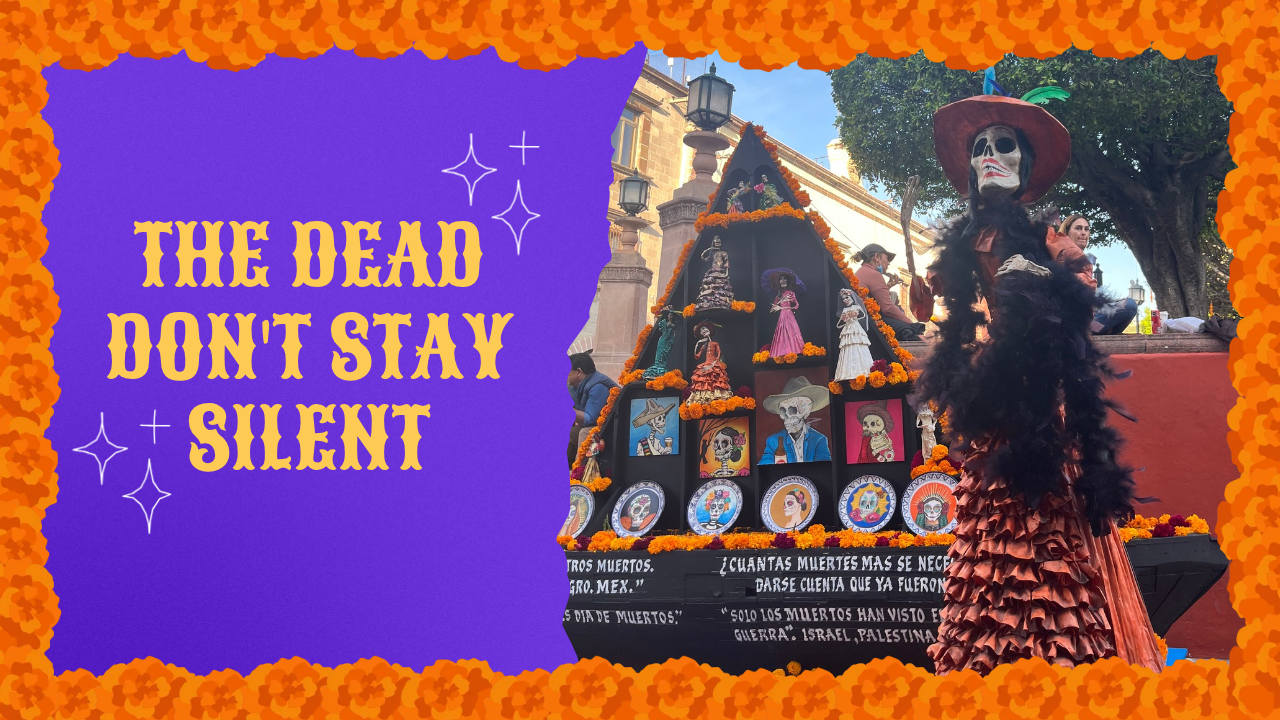
Graphic Courtesy of Kelly Quintana
For generations, music has served as a bridge to the living and the dead. Families in various cultures from Central America to Europe have developed their own versions of celebrating and remembering their loved ones. Among these countries, Mexico has the strongest identity for Día de los Muertos (Day of the Dead).
The roots of the tradition date back 3,000 years, before the Spanish invaded. Originally, the celebration would last throughout two months of the summer. After Spanish missionaries colonized the region, the holiday shifted to Oct. 31 through Nov. 2. During those days, families create at home and/or in the community ofrendas (altars) with offerings. Families decorate them with photographs, candles, cempasúchil (Mexican Marigold), papel picado (paper banners), food, calaveras (sugar skulls) and other offerings based on each family’s meaning. Together, the ofrendas and these special items are used to honor and help guide our loved ones back to visit us all in a joyous way.
Since then, the tradition has grown increasingly popular among larger communities outside of Mexico. Several elements have been passed down through countless generations, yet the way and where the tradition is celebrated has evolved and continues to do so. Timeless dishes, ofrendas, art, music and much more are some of the many ways that the community honors their ancestry. The unity of life and death holds a powerful impact and theme in the annual tradition that can be expressed through melody. Many Latin artists have used their voices to highlight the holiday’s cultural significance.
In honor of Día de los Muertos, here are some songs that resonate.
La Llorna (The Weeping Woman)
Starting with a song with one of the most significant impacts and many covers, including film appearances: La Llorna (The Weeping Woman). The song is best known as a son istmeño from the Isthmus of Tehuantepec in the state of Oaxaca. The most popular cover is by Chavela Vargas, and her cover was featured in the film Frida (2002). The song, in translation, is about a woman who weeps at the death of her husband, who left for war and never returned.
Amor Eterno (Eternal Love)
Amor Eterno (Eternal Love), originally written by Juan Gabriel as an ode to the passing of his mother, was popularized later by Rocío Dúrcal with her Grammy-nominated sixth homage album to Gabriel titled “Canta A Juan Gabriel Volumen 6. Both covers by both artists have left a significant impact.
Muerte (Death)
By Natalia Lafourcade, this song is about giving thanks to death for teaching us to appreciate life, healing, and rebirth.