Giving Credit Where Credit is Due: The Real Problem with Tilly Norwood’s New Music Video

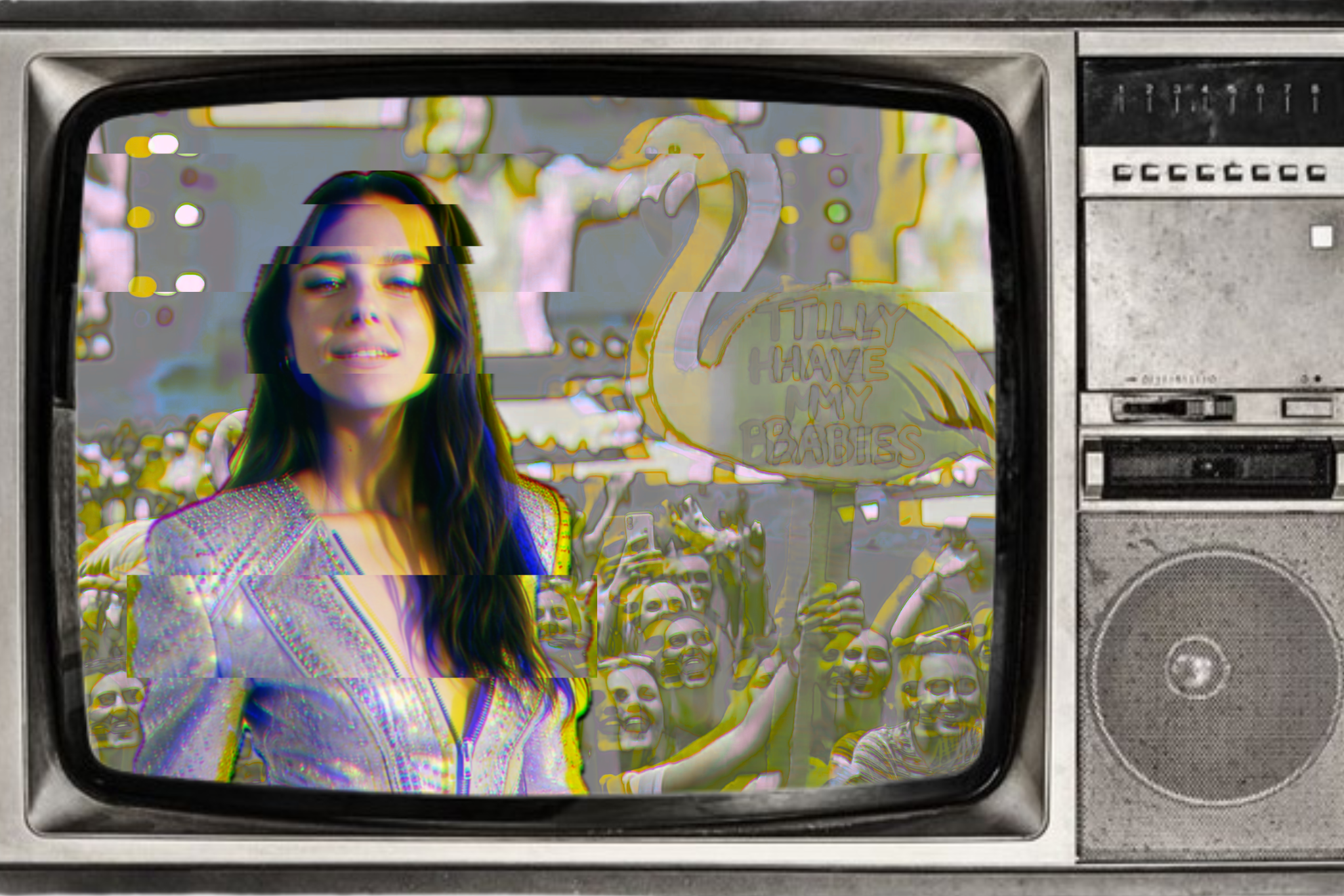
On Tuesday, March 10, AI “Actress” Tilly Norwood stepped into the spotlight once again with the debut of her new single “Take The Lead.” The song’s release, as well as its lyrics, seem to be a result of the large amount of backlash from creatives across the globe since Norwood’s introduction to Hollywood months prior. With lyrics like “They don’t see the human spark, the creativity,” Particle6, the production studio responsible for the character, is directly addressing the criticism while doing exactly the opposite of what critics have been asking for.
This backlash reflects a broader concern within the entertainment industry: whether AI will lead creative jobs to be phased out or replaced. Many artists fear their work will be used to train AI to replicate or imitate aspects of their personal artistic style. For this reason, individuals are less concerned with the existence of AI tools and more with the lack of transparency surrounding how they are used.
The video opens with white text on a black background that reads, “The following production was made by 18 real humans – from production designers to costume designers to prompters, editors, and an actor.” While this may feel disingenuous to some — as if Particle6 is preemptively arguing that it is not trying to replace human labor — I’m more concerned with what the video doesn’t state.
Nowhere in the music video is credit given to any of these “real humans.”
It is not just the video itself: there is no reference to them in the video’s description on YouTube, nothing on any of Norwood’s social media accounts thanking them for their involvement in the project, and not even any acknowledgment on her website.
In traditional music videos, credits serve to acknowledge the authorship of the production, as well as the labor-intensive work and time dedicated to the project. They include the individuals who contribute both on-screen and off-screen and from pre-production through post-production. Whether on-screen, in descriptions, or through databases like IMDb, these credits are a public record of every individual involved.
There is, however, another black screen at the end of the video displaying the production studio’s logo. So, viewers may assume that the studio’s website would have a list of employees and contributors connected to the music video. A thorough search of the site yielded only one result: Eline van der Velden, the founder and CEO of Particle6. Additionally, a review of every video available on the site revealed the same conclusion: not a single video has any production credits.
Between the Tilly Norwood website, the Particle6 website, and all linked social media accounts, the only acknowledgment to be found is a LinkedIn post made by the studio announcing the music video’s release. Even that post credited only 12 people, despite the video’s claim that 18 worked on the production.
To be fair, not every music video includes a full list of production credits, especially on social platforms. The issue, however, is the studio’s explicit emphasis on the involvement of “real humans” paired with its failure to credit any of the individuals involved. The claim featured in the music video is a clear attempt to legitimize the work, but by keeping the names of the contributors invisible, it instead reinforces artists’ concerns about losing authorship of their own work to AI.
The purpose of this article is not to accuse anyone of dishonesty. I do believe that humans were involved in the creation of Tilly Norwood’s new music video. At the very least, the AI would require human input in the form of prompts to produce the video. But it is important to recognize the juxtaposition between Particle6’s claim to put “human creativity first” on the company website while undermining that claim by leaving the people behind their productions uncredited.
In an industry where authorship and credibility are so deeply intertwined, the fear has never been AI itself, but the possibility of an artist becoming severed from their own work. Artists aren’t simply looking for a song to tell them, “AI’s not the enemy;” they’re looking for companies to show them that the two can truly coexist. Until then, it’s up to us to hold our ground.