How This Anime Teaches Us to Love the Dark Side

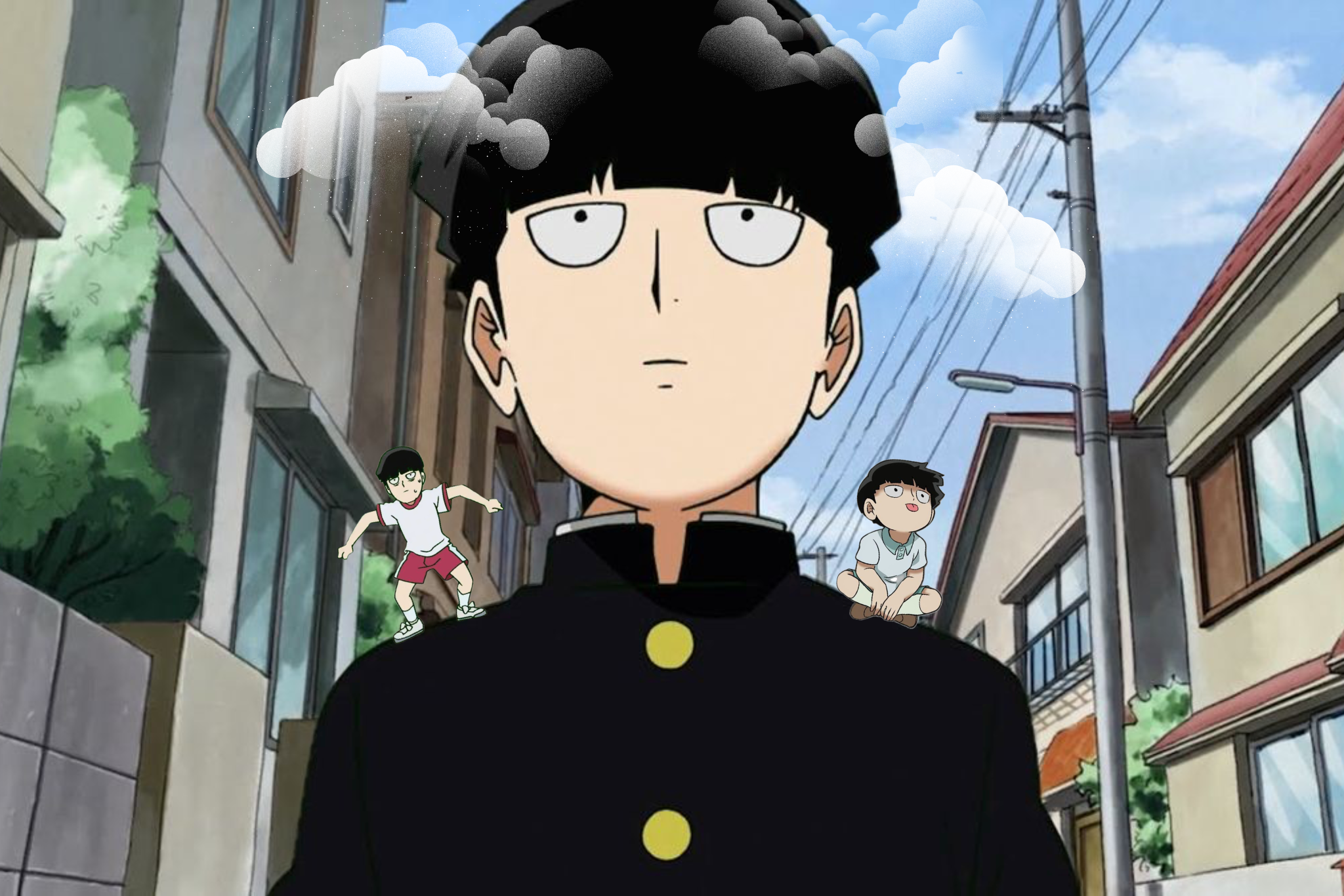
It’s so easy to feel lost, wandering through life, wondering if things will ever change. Wondering if they’ll ever get better. It’s just as easy to become addicted to the anxious feeling that crawls underneath your skin, the battle you have to fight every day. We tuck away the worst parts of ourselves, hoping they’ll disappear, but all it really does is let it fester. That dark side is part of you, and it’s waiting to be accepted. Only then will you be whole. It may sound silly, but I didn’t learn this lesson from a profound documentary or film; I learned it from an anime.
“Mob Psycho 100” focuses on Shigeo Kageyama, an awkward middle-school student nicknamed Mob, who was born with psychic powers. This includes everything from communicating with and exorcising ghosts to levitation. For the longest time, Shigeo was the only one of his kind. If others found out about his powers, he would be misunderstood, labeled weird or a freak.
It’s quite unfortunate because he’s an extremely friendly, empathetic kid. His emotionless exterior doesn’t help when it comes to the misunderstandings, though. It’s a byproduct of Mob’s struggle to express his emotions. He often suppresses them entirely until they boil over, sending him into emotional episodes where his powers become uncontrollable and result in violent incidents throughout his life.
One of these defining incidents happened when he was in elementary school. Older kids were harassing him and his younger brother, Ritsu, on the way home, sending Shigeo into one of these breakdowns. When he became conscious again, both the bullies and his younger brother had been injured in the process. It’s an event from which he has never fully recovered. All these years later, he still feels extremely guilty and upset at himself for hurting someone he loves. Just the idea that he was capable of such a thing was enough for him to refuse to use his powers. To the best of his ability, he vowed to “mask” as if he were like everyone else until he found a job where his powers could be used for good.
Shigeo, in every sense of the word, is being exploited, but that comes with the territory of being a naive kid. He is paid below minimum wage and overworked incessantly, often called in with little notice. Oddly enough, this job allows him to reframe how he views his powers. They are no longer just associated with a bad episode, but have become a vehicle to help people. He not only has a hand in saving the living but is also a bridge between the dead as he exorcises evil spirits and lays them to rest.
Shigeo is unique, whether he recognizes it or not. He’s exceptionally strong, abnormally kind, and has a perspective on the world like no other. This part of him that he suppresses and views as a burden also has value.
Through my personal journey with therapy, I’ve learned a lot about dialectical thinking, or allowing yourself to see different perspectives of situations or yourself. Watching “Mob Psycho 100,” I unexpectedly saw myself through Shigeo: someone who suppresses their emotions and tucks away the parts of themselves they think others will reject. But by doing that, it often has the opposite effect. Those emotions of self-hatred, anger, and sadness boil to a point where they become uncontrollable. With Shigeo’s story, I found clarity, as he goes on a journey of accepting the “darker” sides of himself. This story may be wrapped in the guise of a silly anime, but in reality, it’s one of the most compelling portrayals of neurodivergence I’ve seen.
The show is really great at showing of the good just as much as the bad. There are charming and funny moments when Shigeo is a bit too naive and impulsive for his own good. I find the moments when he’s trying desperately to live a regular life the most captivating to watch. He ends up way over his head when he joins the Body Improvement Club and is too out of shape to keep up with the rest of them. There are crushes, embarrassing moments, and ones of grand delusion, like when Shigeo gets a really big head after noticing a bunch of girls are looking his way. He’s drawn in some shots with a really “Chad” face to reflect his newfound confidence. Watching that, I longed to be as delusional as my king, Mob.
Using psychic powers as a point of difference is an exceptional vehicle for the message as well. While there can be comical moments, oftentimes, neurodivergence can feel incredibly isolating. It can be difficult to relate to the experiences of others. Struggles with social cues and sensory experiences, which can appear across multiple disorders, can cause loneliness, especially from a lack of accommodations or the perceptions from others.
Shigeo goes through both. There are times when others reject him for his differences, and times when people can recognize the good character beyond his blank stare. The audience even sees that his first crush developed in elementary school from this very experience. A girl named Tsubomi was the first person to accept his differences. Experiences of true acceptance, since they are so rare, can be so profound.
The last three episodes of the series are the most impactful. Shigeo finally works himself up to confessing his feelings to Tsubomi. He calls her to make plans and buys her flowers, but on the walk there, he sees a car about to hit a young child. Shigeo pushes him out of the way to save him and gets hit in the process. The accident triggers an extremely violent episode where Shigeo uncontrollably destroys the whole town.
Several people, including his brother Ritsu and frenemies from his past, tried to stop him. But Shigeo was like a natural disaster; he was unstoppable and everything and everyone in his path was collateral. His master, Reigen, was the last person to try to help him. Shigeo’s inner self feared he wouldn’t accept him in this form – that he would fear him like everyone else. But Reigen had a unique approach to the problem: he told the truth. He confessed to lying about being a psychic and apologized for exploiting him. Reigen broke every negative expectation Shigeo had.
This moment is one of the best illustrations of a mental health episode. They come at the worst times possible, anything can trigger them, and they almost work like a natural disaster. Your emotions are so heightened that you’re willing to hurt even those you love. When you’re in the storm, it can feel like it will never end, like this is the last stop.
But after the storm, the sun comes out. Shigeo needs that moment to finally accept and heal that part of himself he’s always rejected. With the help of Ritsu and Reigen, he recognizes the only way he can move forward from his past mistakes is to forgive himself. To accept that these episodes are a part of him. Neither side of himself is bad or good; it just is.
I’ve found that accepting myself is the hardest battle ever, but forgiving myself can be even harder. I’ve struggled with anxiety and depression virtually all of my life, and there’s a lot of shame that comes with having mental health difficulties. You can be afraid to ask for help or be paranoid that others will find your presence burdensome. There have been plenty of times throughout my college experience when I’ve experienced very public panic attacks, and the shame from that perceived weakness only worsens the impact. It’s easy to get trapped in this cycle of fearing a lack of acceptance, so, in turn, we mask or try to “fix” ourselves for others until we reach a breaking point
I think what “Mob Psycho 100” teaches is that none of us can get through anything alone. We need people that we can lean on sometimes, to get to a place where we can lean on ourselves. No battle was meant to be fought alone, and that includes the battle many of us fight every day. People you can trust may be rare, but that’s why you should treasure them even more. There’s no shame in who you are, no matter how odd or different you may feel. That dark side is no worse than any other part of you, and it’s waiting to be accepted with open arms.