By: Ola Fashola
Growing up in Metro Atlanta, the last couple of years have started to pique my interest when it comes to observing an ongoing problem that’s been occurring across the city and the greater Atlanta area.
More specifically, a problem with the youth. Far too often, I have been hearing many news headlines discussing how teenagers have been gathering around and occupying massive spaces all over the city. A “teen takeover,” if you will. While such a scenario seems harmless on paper, nearly all of these reported teen takeovers have made news headlines for all the wrong reasons, with the following examples truly showing how problematic this situation has become.
In March, Fox5 Atlanta news reported that nine people were arrested in Gwinnett County. This started with a group of teens and young adults who seemingly came together to socialize. This meetup quickly escalated into a riot, as fights and property damage occurred, resulting in one teenager being injured. While this may not sound too harmful, there are more extreme cases of this.
Only a month later, Fox5 News once again reported a deadly shooting that occurred in Piedmont Park that resulted in the death of a young teenage girl and another individual being hospitalized. This shooting was supposedly orchestrated by four people and occurred after a reported congregation of teenagers. To make things worse, this event transpired on the 404 Day, an annual celebration of Atlanta’s community, history, and culture. This was not supposed to be a day when innocent bystanders would have to run in fear just to have hopes of living to see another day. While footage of the suspects behind the shooting has been revealed, Police officers initially were unable to identify the shooters. Months later, by Aug 5, Fox5 news revealed that one of the suspects was Kaine Burnette, a 17-year-old boy who turned himself in to Fulton County Jail after admitting to being involved in the crime.
Another instance of such events transpiring would be the Atlantic Station fiasco that occurred on December 28, 2025, involving 400 unsupervised teenagers who started riots and set off fireworks in the Atlantic Station, causing many nearby civilians to run in fear, having mistaken the fireworks for gunshots. This resulted in five juveniles being detained for such actions. In response, stricter rules were imposed, such as curfews for minors and adults who go above the limit of the number of teenagers they accompany being charged.
All of these unfortunate events raise the question: what’s the cause of these teens’ behavior? I initially suspected it was due to the decline of open hubs and spaces, but after doing more research, I found that the answer runs deeper than I thought.
News articles from Governing have reported that teen takeovers have been running rampant all over various other cities besides Atlanta, including Chicago, Detroit, Washington, D.C., and more. As I continued to read the Governing article, I finally came across someone who provided a possible answer behind these rampages. Darryl Winston, an Atlanta pastor, answered with a simple saying, “Young people don’t have enough places to go.” Speaking from my own experience, before the 2020s started, I had access to many spots and events to attend. I grew up going to places like Chuck E Cheese or Sky Zone. Both provided means of entertainment via arcade games, community events, and trampoline parks. Families and friends could book slots to attend these spots for birthdays or other special occasions. Fast forward to today, spaces like Chuck E Cheese and Sky Zone just seem like forgotten memories.
Outside of social environments, I grew up on video game consoles that allowed for local multiplayer, meaning you could play with multiple people at once in the same room. There’s a reason that consoles like the Wii are remembered so fondly to this day, decades later. However, in the present day, video game culture prioritizes online play, which requires monthly subscription payments just to communicate with people online. According to Vivid Gold, the modern video game market even chooses online play because it’s more profitable as the main selling point for games rather than multiplayer. They describe how the lack of shared real experiences, inside jokes, and community are some of the many losses that come with the decline of local co-op. This, coupled with the expenses that come with subscriptions and pricey modern game controllers, further contributes to the lack of interactions and bonding.
Such things seem to be foreign, if not absent, concepts nowadays. Rarely ever do I see teenagers hanging out in real spots and places where they can entertain themselves, and if I do, it’s a minuscule amount compared to what I formerly experienced. This leads into the next issue. The 2020 Pandemic. I believe this is the biggest culprit for the death of adolescent spaces. Kicking off the decade with a widespread disease outbreak that forced the majority of the world to go into lockdown and stay at home has had long-lasting negative effects.
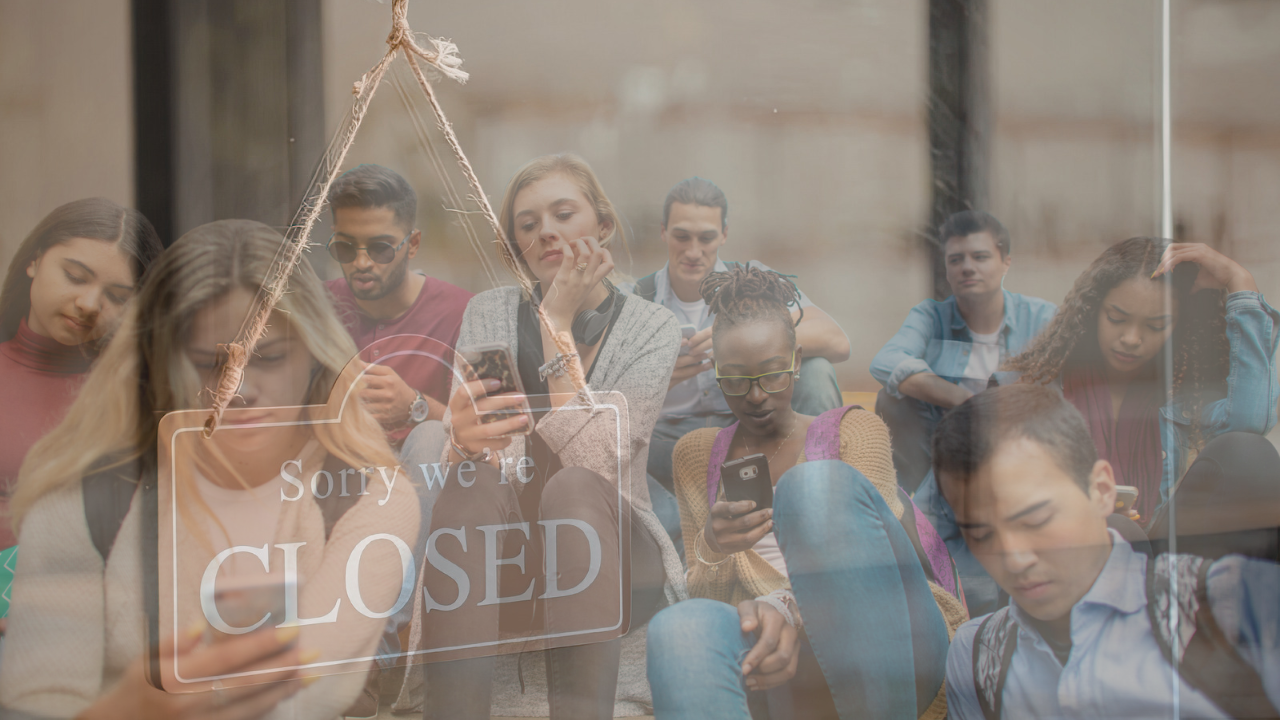
I, myself, was only 14 when quarantine hit in early 2020. Because of this, I and most of my fellow Gen Z, along with Gen Alpha, had to spend our remaining school years at home. I spent my entire freshman year of high school at home, a whole year with devices and laptops being my only real form of communication with the outside world. This contributed to a decrease in social skills and academic efficiency, as well as addictions and attention spans being shot by the constant consumption of modern social media’s short-form content. Worst of all, the outbreak impacted many well-known hangout spots and entertainment events, tying in to what I previously said about spaces such as Chuck E Cheese and Atlanta’s music venues either becoming rarer or shutting down completely due to the lack of financial support from having no customers after their quarantine shutdowns.
When you weigh all the circumstances that have transpired within the past six years such as virus outbreaks, the overuse of devices, AI becoming extremely normalized combined with the frequent financial crises causing many establishments to shut down and families being evicted from their homes, the question becomes less about why teens are rioting and misbehaving in public places but how can we quell the rambunctious behavior of teenagers and bring back adolescent communities that have long since died in recent years? What steps can we take to ensure that, when all of the current worldwide drama is said and done, we will be able to usher in a new renaissance era that can entertain and transform the lives of many teenagers?